

Reader in Social Geography, Newcastle University
'SELECT SQL_CALC_FOUND_ROWS wp_posts.ID
FROM wp_posts INNER JOIN wp_postmeta ON ( wp_posts.ID = wp_postmeta.post_id )
WHERE 1=1 AND (
wp_posts.ID NOT IN (
SELECT object_id
FROM wp_term_relationships
WHERE term_taxonomy_id IN (47485,47486)
)
) AND (
(
( wp_postmeta.meta_key = \'the_author\' AND wp_postmeta.meta_value = \'3472605\' )
OR
( wp_postmeta.meta_key = \'secondary_author\' AND wp_postmeta.meta_value LIKE \'{49d108832039eb6c99266ffbc1d21a3e87a02ed46e78bba7abb4f1d9063e78d0}\\"3472605\\"{49d108832039eb6c99266ffbc1d21a3e87a02ed46e78bba7abb4f1d9063e78d0}\' )
)
) AND wp_posts.post_type = \'post\' AND ((wp_posts.post_status = \'publish\'))
GROUP BY wp_posts.ID
ORDER BY wp_posts.post_date DESC
LIMIT 0, 6'
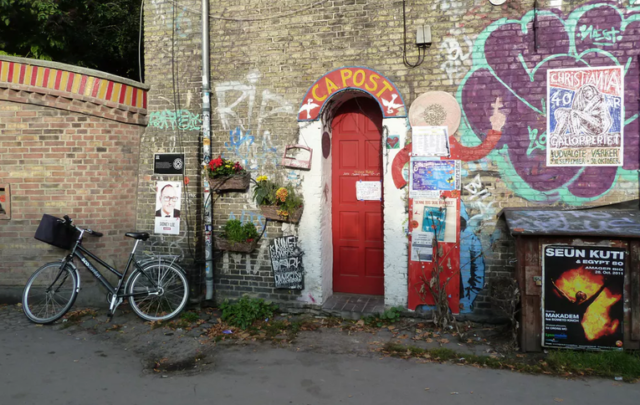
Degrowth and Christiania
Since the first squatters arrived in 1971, the self-proclaimed Freetown of Christiania has inspired radical thinking and social experimentation. Affectionately described as “loser’s paradise”, the squat became a haven for young people unable to access affordable housing in Copenhagen, and activist pioneers from all over the world.
July 5, 2018

