

Assistant Professor, Centre for Agroecology, Water and Resilience
'SELECT SQL_CALC_FOUND_ROWS wp_posts.ID
FROM wp_posts INNER JOIN wp_postmeta ON ( wp_posts.ID = wp_postmeta.post_id )
WHERE 1=1 AND (
wp_posts.ID NOT IN (
SELECT object_id
FROM wp_term_relationships
WHERE term_taxonomy_id IN (47485,47486)
)
) AND (
(
( wp_postmeta.meta_key = \'the_author\' AND wp_postmeta.meta_value = \'3480026\' )
OR
( wp_postmeta.meta_key = \'secondary_author\' AND wp_postmeta.meta_value LIKE \'{fe8981b07e8912b1ed54ed2c89eda3b64faa78fe1bfa8185d72b9d547f6802e2}\\"3480026\\"{fe8981b07e8912b1ed54ed2c89eda3b64faa78fe1bfa8185d72b9d547f6802e2}\' )
)
) AND wp_posts.post_type = \'post\' AND ((wp_posts.post_status = \'publish\'))
GROUP BY wp_posts.ID
ORDER BY wp_posts.post_date DESC
LIMIT 0, 6'
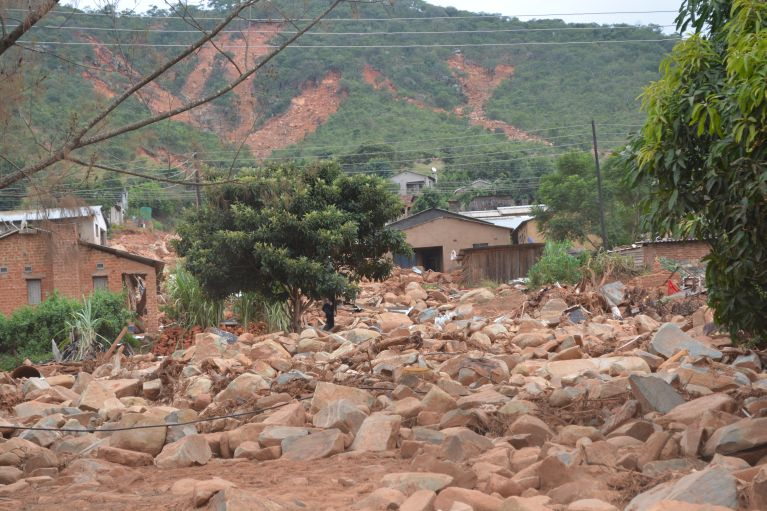
Building Resilience to Natural Disasters in Populated African Mountain Ecosystems
As part of CAWR’s Stabilisation Agriculture Programme, I recently visited Chimanimani district in Zimbabwe to initiate comparative research on how conventional and agroecologically managed landscapes coped with the impacts of Cyclone Idai in March 2019. Idai deposited the total annual rainfall in the first twelve hours alone – yet sat over and devastated Chimanimani for three days.
February 6, 2020

