

has degrees in Audiovisual Arts and Political Sciences. She also works as a freelance graphic designer and illustrator.
'SELECT SQL_CALC_FOUND_ROWS wp_posts.ID
FROM wp_posts INNER JOIN wp_postmeta ON ( wp_posts.ID = wp_postmeta.post_id )
WHERE 1=1 AND (
wp_posts.ID NOT IN (
SELECT object_id
FROM wp_term_relationships
WHERE term_taxonomy_id IN (47485,47486)
)
) AND (
(
( wp_postmeta.meta_key = \'the_author\' AND wp_postmeta.meta_value = \'3480190\' )
OR
( wp_postmeta.meta_key = \'secondary_author\' AND wp_postmeta.meta_value LIKE \'{d6da14683ff55bc83bea51368b711b8232a909a343b8230ec2aa5f5f1d325125}\\"3480190\\"{d6da14683ff55bc83bea51368b711b8232a909a343b8230ec2aa5f5f1d325125}\' )
)
) AND wp_posts.post_type = \'post\' AND ((wp_posts.post_status = \'publish\'))
GROUP BY wp_posts.ID
ORDER BY wp_posts.post_date DESC
LIMIT 0, 6'
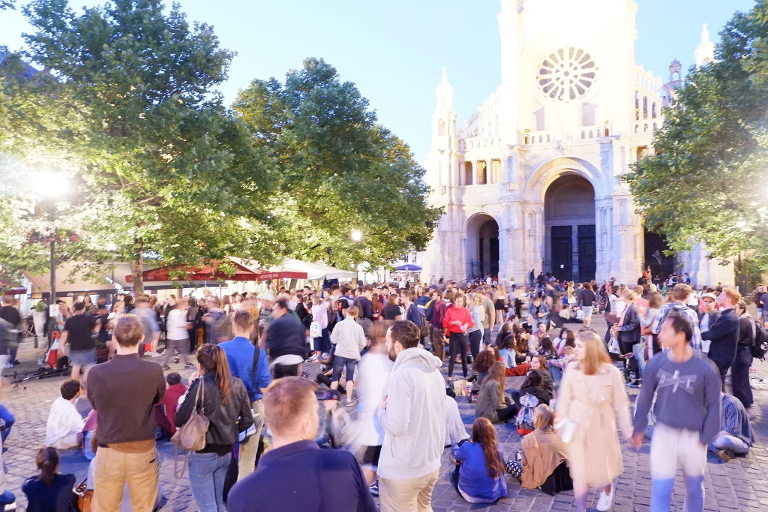
Strategies for Cultural Change: Degrowth and the Use of Space
Henri Lefebvre, a French philosopher from the 20th century, argues that if ideas or values are not physically implemented in space, they become mere fantasies. As such, if degrowth wishes to prevail, it has to leave its mark on space, just as consumerism has successfully done. This article considers ideas of creating space and human-nature connectedness, which in combination, seem to be a perfect match in forming a strategy for degrowth.
February 20, 2020

