Staff writer for Grist.
'SELECT SQL_CALC_FOUND_ROWS wp_posts.ID
FROM wp_posts INNER JOIN wp_postmeta ON ( wp_posts.ID = wp_postmeta.post_id )
WHERE 1=1 AND (
wp_posts.ID NOT IN (
SELECT object_id
FROM wp_term_relationships
WHERE term_taxonomy_id IN (47485,47486)
)
) AND (
(
( wp_postmeta.meta_key = \'the_author\' AND wp_postmeta.meta_value = \'3508262\' )
OR
( wp_postmeta.meta_key = \'secondary_author\' AND wp_postmeta.meta_value LIKE \'{fd324688a7def55af242a078c5cab7746fc47ab24b206a27bab3958509ca015f}\\"3508262\\"{fd324688a7def55af242a078c5cab7746fc47ab24b206a27bab3958509ca015f}\' )
)
) AND wp_posts.post_type = \'post\' AND ((wp_posts.post_status = \'publish\'))
GROUP BY wp_posts.ID
ORDER BY wp_posts.post_date DESC
LIMIT 0, 6'
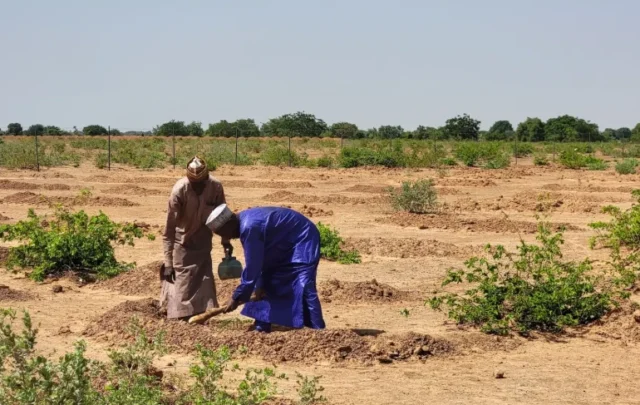
Three-quarters of the world’s land is drying out, ‘redefining life on Earth’
As Earth grows warmer, its ground is becoming drier and saltier, with profound consequences for the planet’s 8 billion inhabitants — nearly a third of whom already live in places where water is increasingly scarce and the ability to raise crops and livestock is increasingly difficult.
February 3, 2025