

Professor, University of Wollongong
'SELECT SQL_CALC_FOUND_ROWS wp_posts.ID
FROM wp_posts INNER JOIN wp_postmeta ON ( wp_posts.ID = wp_postmeta.post_id )
WHERE 1=1 AND (
wp_posts.ID NOT IN (
SELECT object_id
FROM wp_term_relationships
WHERE term_taxonomy_id IN (47485,47486)
)
) AND (
(
( wp_postmeta.meta_key = \'the_author\' AND wp_postmeta.meta_value = \'3500276\' )
OR
( wp_postmeta.meta_key = \'secondary_author\' AND wp_postmeta.meta_value LIKE \'{7ad133860cb84e81efe4071eb22ad8eedca9c546921335662c63e513a163a37c}\\"3500276\\"{7ad133860cb84e81efe4071eb22ad8eedca9c546921335662c63e513a163a37c}\' )
)
) AND wp_posts.post_type = \'post\' AND ((wp_posts.post_status = \'publish\'))
GROUP BY wp_posts.ID
ORDER BY wp_posts.post_date DESC
LIMIT 0, 6'
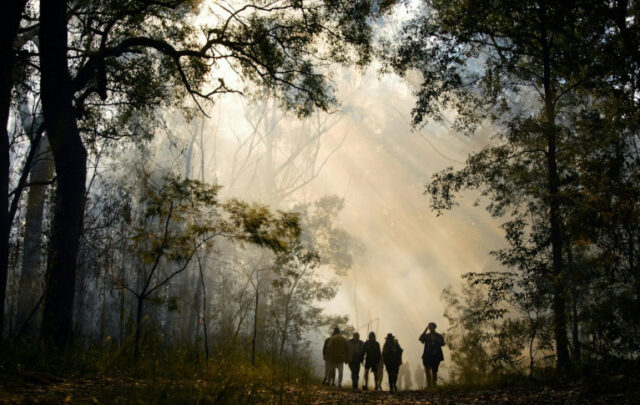
Cultural burning is better for Australian soils than prescribed burning, or no burning at all
Imagine a landscape shaped by fire, not as a destructive force but as a life-giving tool. That’s the reality in Australia, where Indigenous communities have long understood the intricate relationship between fire, soil and life.
March 20, 2024

