

“Everything has completely changed, Tom.” Sitting in his old wooden house on a mountainside near Sibebe Rock in Eswatini, Southern Africa, Warren lit his gas stove to boil water for two cups of tea. I mistakenly added salt to mine; he laughed and poured another. As a boy, Warren remembers bathing in the mountain streams and running naked in the warm rains of the Swazi summertime. This summer, however, was different. The rains were heavier, the ground saturated, jerseys were worn, and heaters were switched on. He spoke of storms, rivers bursting their banks, trails and roads eroding away, and crops threatened by water-logging, disease, and invasive plants.
December 21, 2025, was the summer solstice in the Southern Hemisphere. I had arrived in Eswatini the previous day, crossing the border at Ngwenya and arriving at my guesthouse by nightfall. I had been recommended a campsite near Sibebe Rock – the world’s largest granite dome and second-largest continuous rock – by the owner of a backpackers’ camp in Nata, Botswana, and I was determined to find it.
From my accommodation in Pine Valley that night, I sent a WhatsApp message to a phone number I had found online for the Off Track campground. To my surprise, the man I was searching for responded. Jason, the owner of the campground, explained that the site was self-service, offered limited facilities if I didn’t have my own cookstove, and access was limited to an hours-long hike in the hills or to some pretty gnarly 4×4 tracks. Thankfully, Jason was in Mbabane that day and was willing to pick me up in his truck on his way back to camp in the morning.
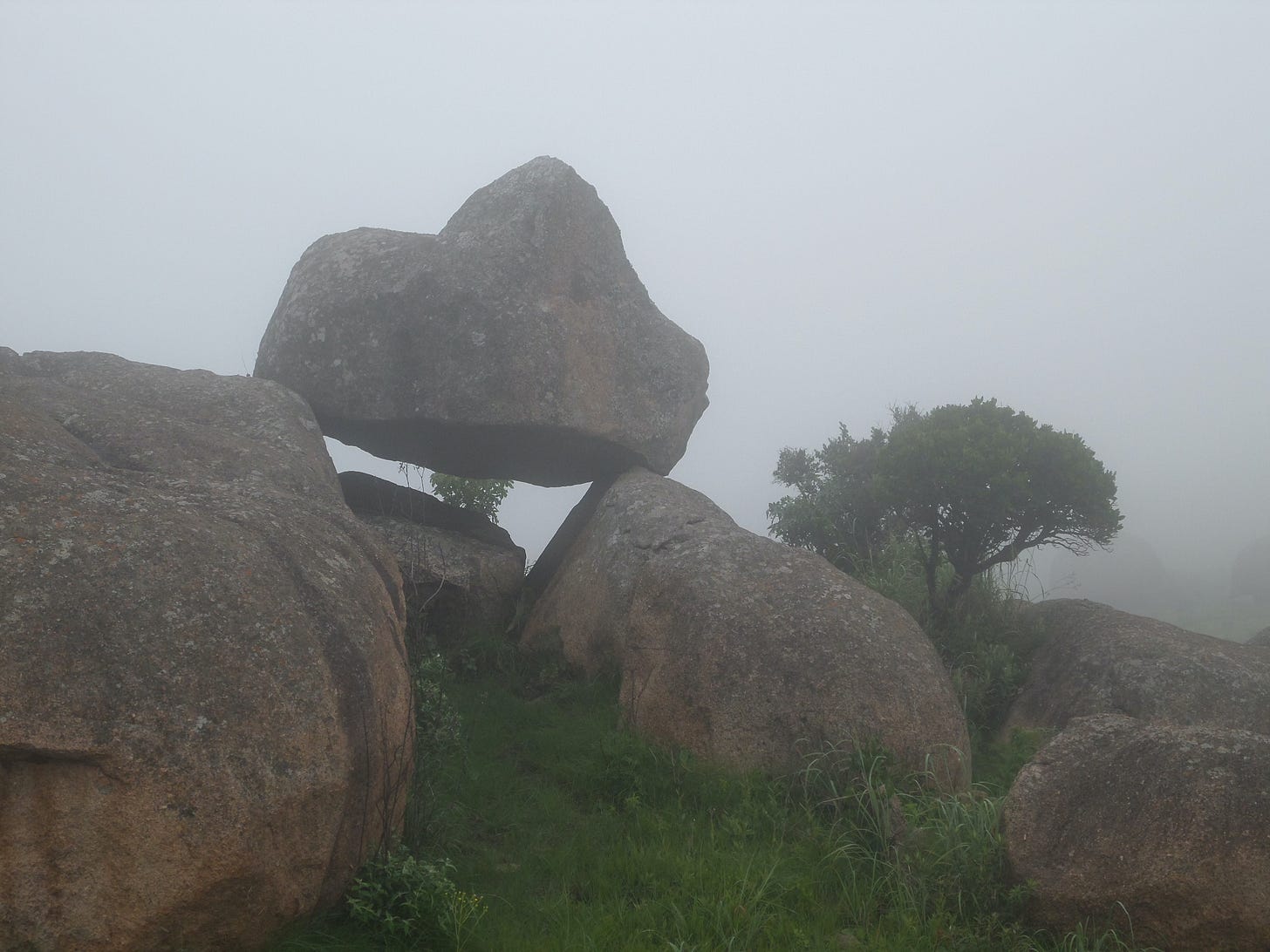
Jason suggested that I stay with his neighbour, rather than at his own campsite, since I’d have access to cooking equipment there. We arrived at Warren’s place that morning, driving over trench-ridden mud tracks in Jason’s huge off-roader. I detached the wire that was keeping the fence to the property shut, only for the wire to slap back and hit me in the face. Jason drove the truck through the gate as Warren emerged from his modest cabin, which stood partially on wooden stilts. I shook his hand and introduced myself. I’d camp in my tent on the hill behind his house for the next two nights; he was keen to develop a small-scale campsite here for extra income. The three of us walked together to choose a pitch site between some house-sized boulders on the hill, with two forming a sizeable chamber between them, which Warren called the cave. It was a mystical place to camp, on a remote hillside looking over the smallholdings of the valley below. That is, when it wasn’t too misty to see beyond fifteen metres.
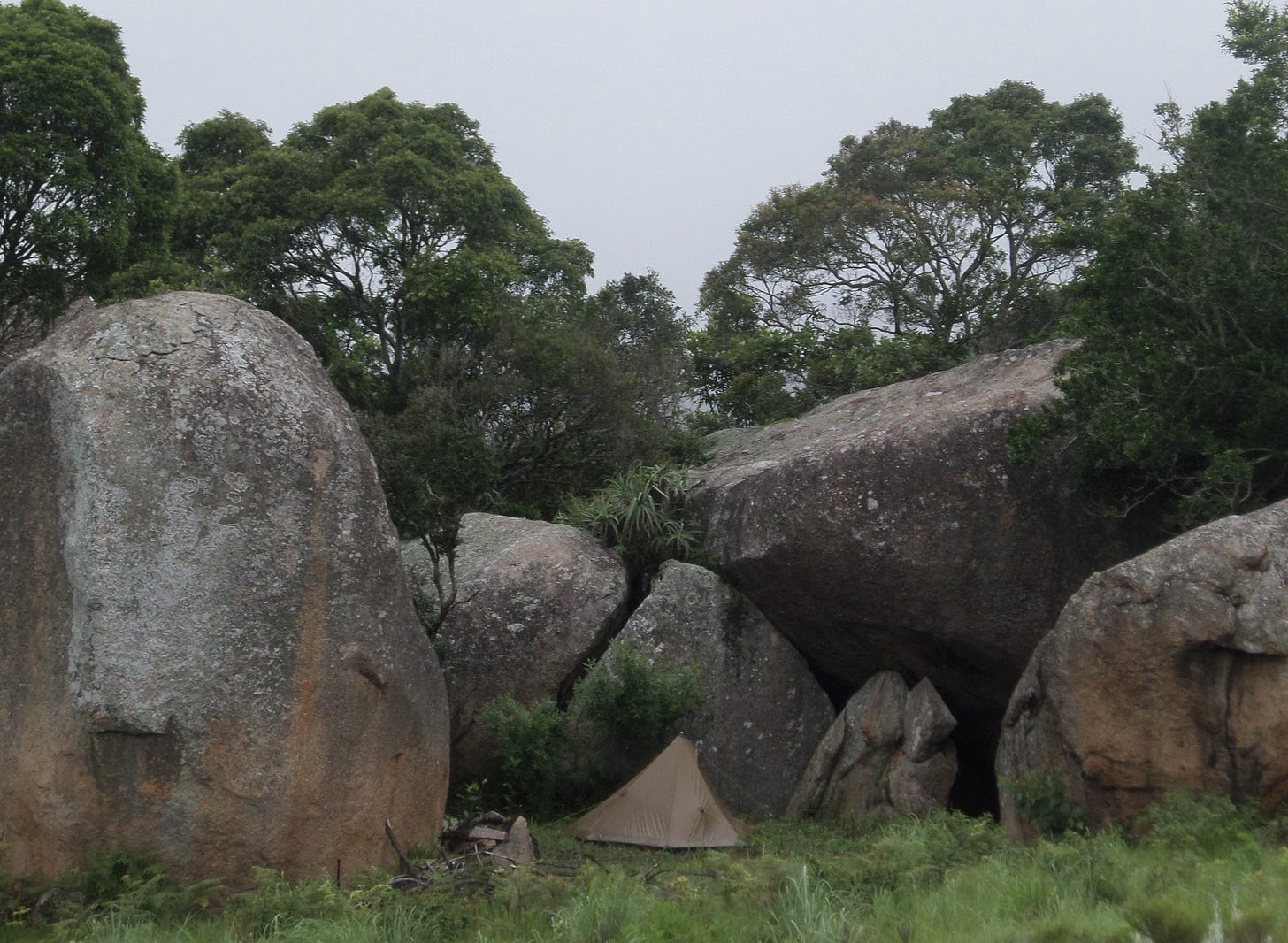
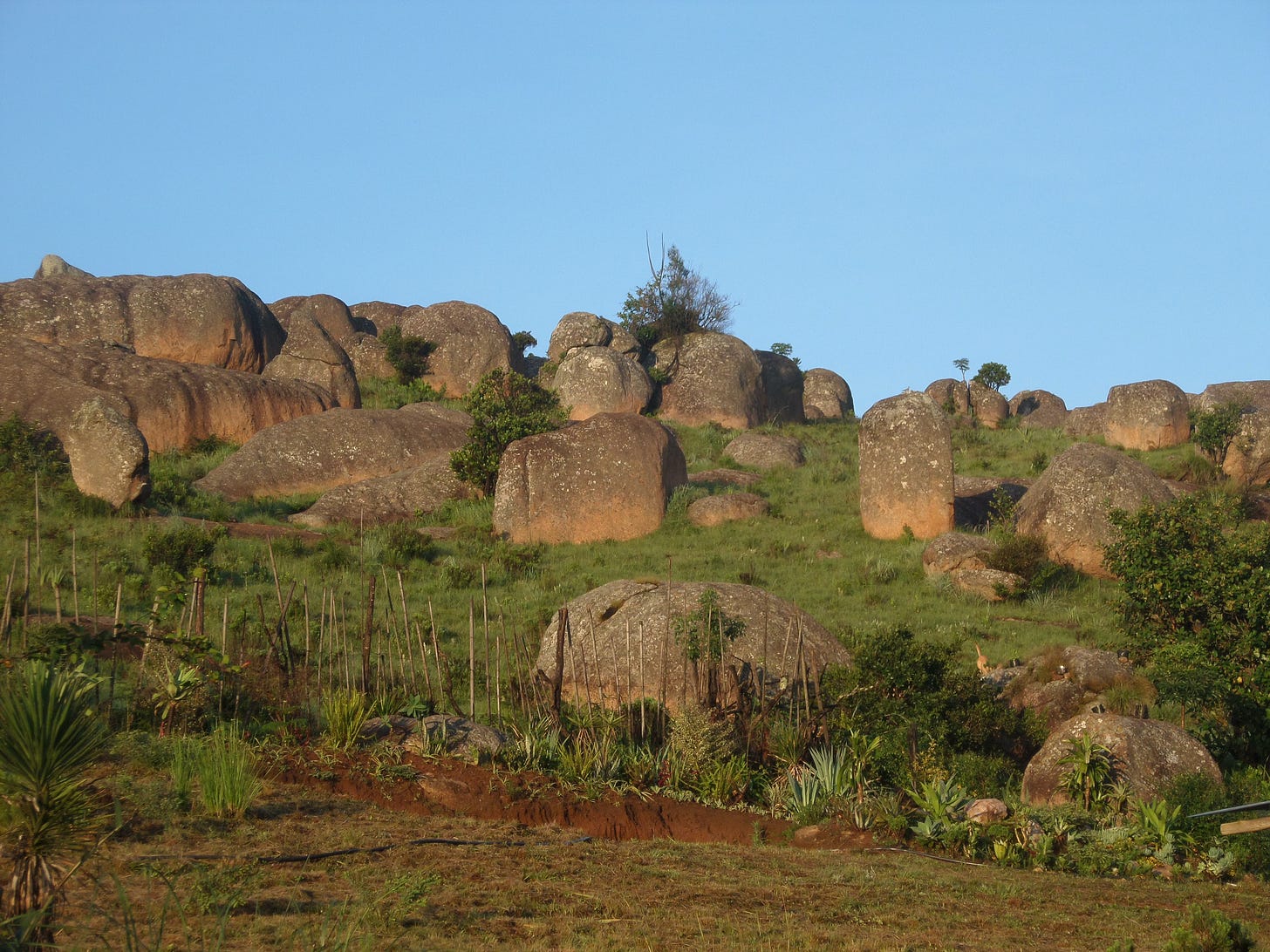
Warren, now in his seventies, has been living alone on this mountainside for some years now. He returned to his home country following the pandemic, having spent the previous twenty years in Germany. Originally acquiring the land under Swazi custom from his local chief in 1995, he chose this hill for its unique beauty, crystal-clear freshwater springs, free access to ancient rock paintings, and the variety of rare flowers and indigenous trees native to this region. What’s more, the land here stays green all year round, even in the drier winters. For years, he has been cultivating a rich garden of subtropical plants using ecosystem-friendly permaculture techniques, all by himself. On that misty solstice day in December, he took me for a walk around the 35 hectares of mountainous terrain under his stewardship, strewn with enormous, uniquely shaped granite boulders.
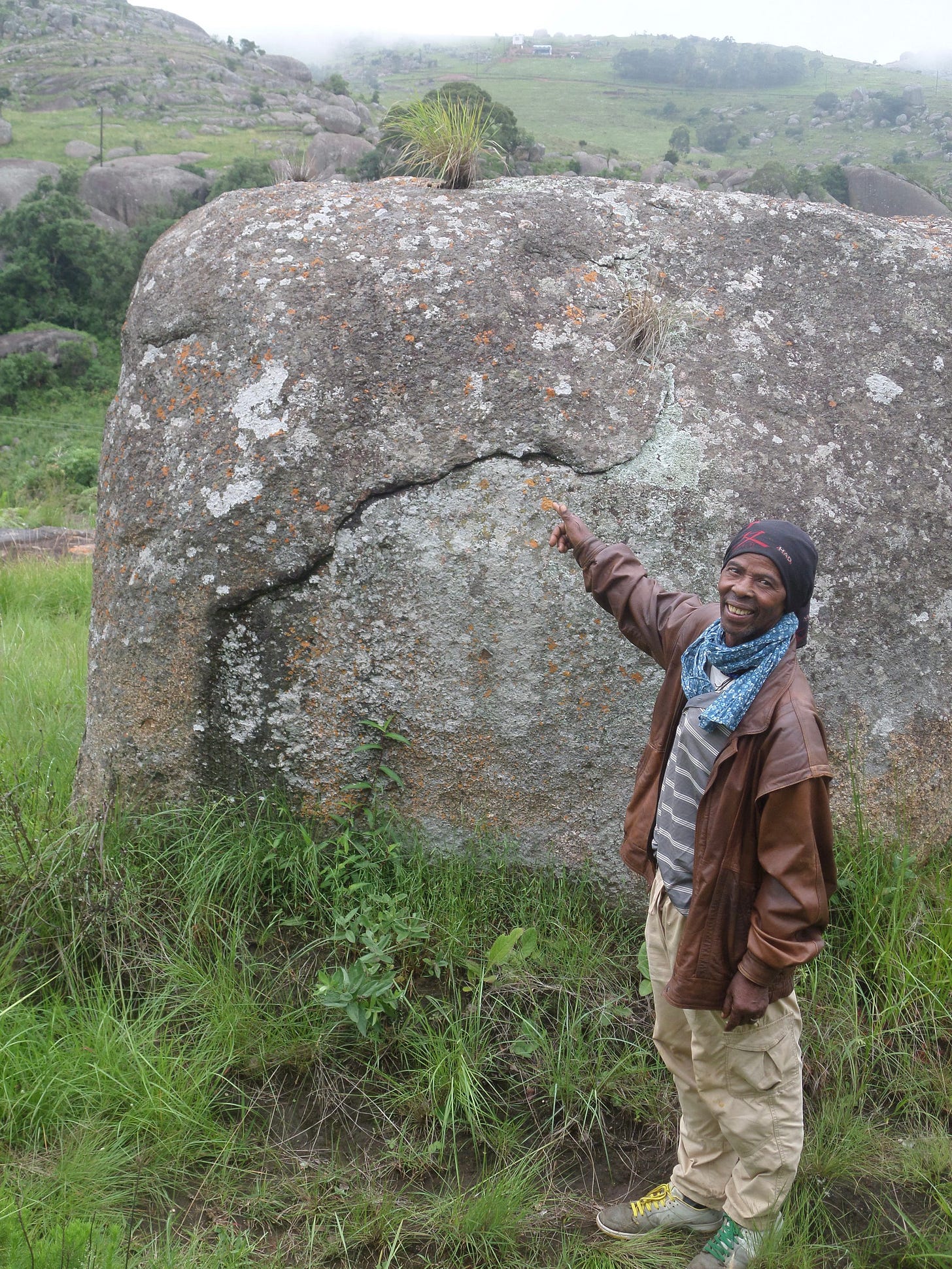
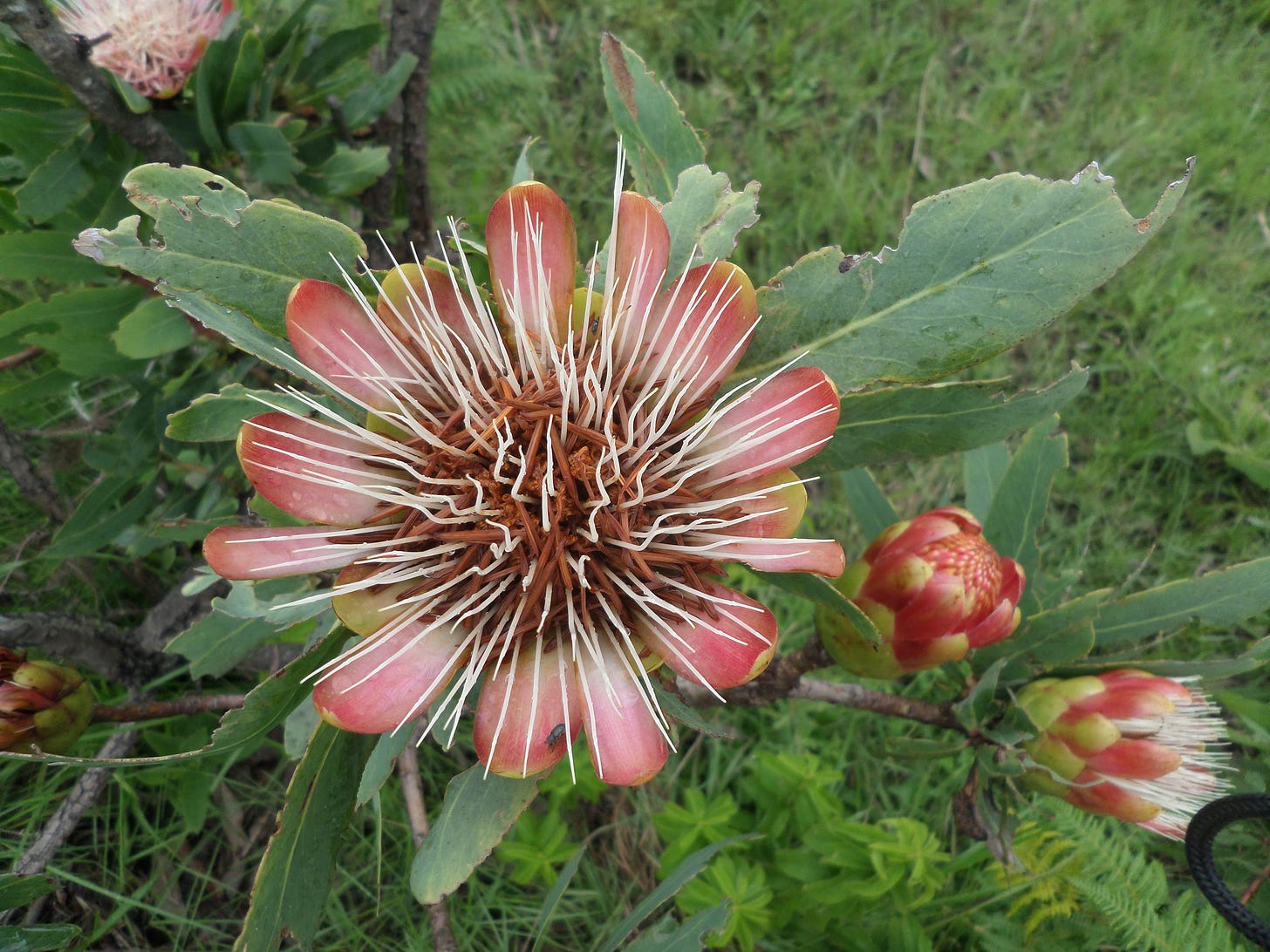
We climbed the hill towards the largest of the boulders at the very top, his big German-speaking dog, Bones, running off to bite the tails of grazing cows. Warren showed me the plethora of plants he liked most to cultivate at his gardens around his home, including aloe vera plants, types of protea flowers, and a type of ‘yellow’ tree – the latter two, he told me, are only found in this area. He showed me some of his favourite sites on the hill, including: the museum, an assortment of large boulders encircling a central chamber; the coffin, which this boulder eerily resembled; and the elephant, a boulder in the shape of the beloved mammal. Some wooden ladders offered access to the peaks of the boulders, which overlooked the lush mountain valleys below. He also showed me some areas he’d like to develop for small tents by cutting back the vegetation and doing some landscaping, his primary profession. We passed a small waterfall on the river and several pools tempting us for a cold swim. In his central garden space, where he’d propagated countless indigenous plants on the rocks and along the paths, he showed me his communal grilling area and shelter, along with a space between boulders where he plans to build a pond. He also revealed some spaces where his sons, who currently live in Germany but visit annually, could build a home for themselves; Warren himself is building a second small home using concrete blocks just across the path from the cabin.
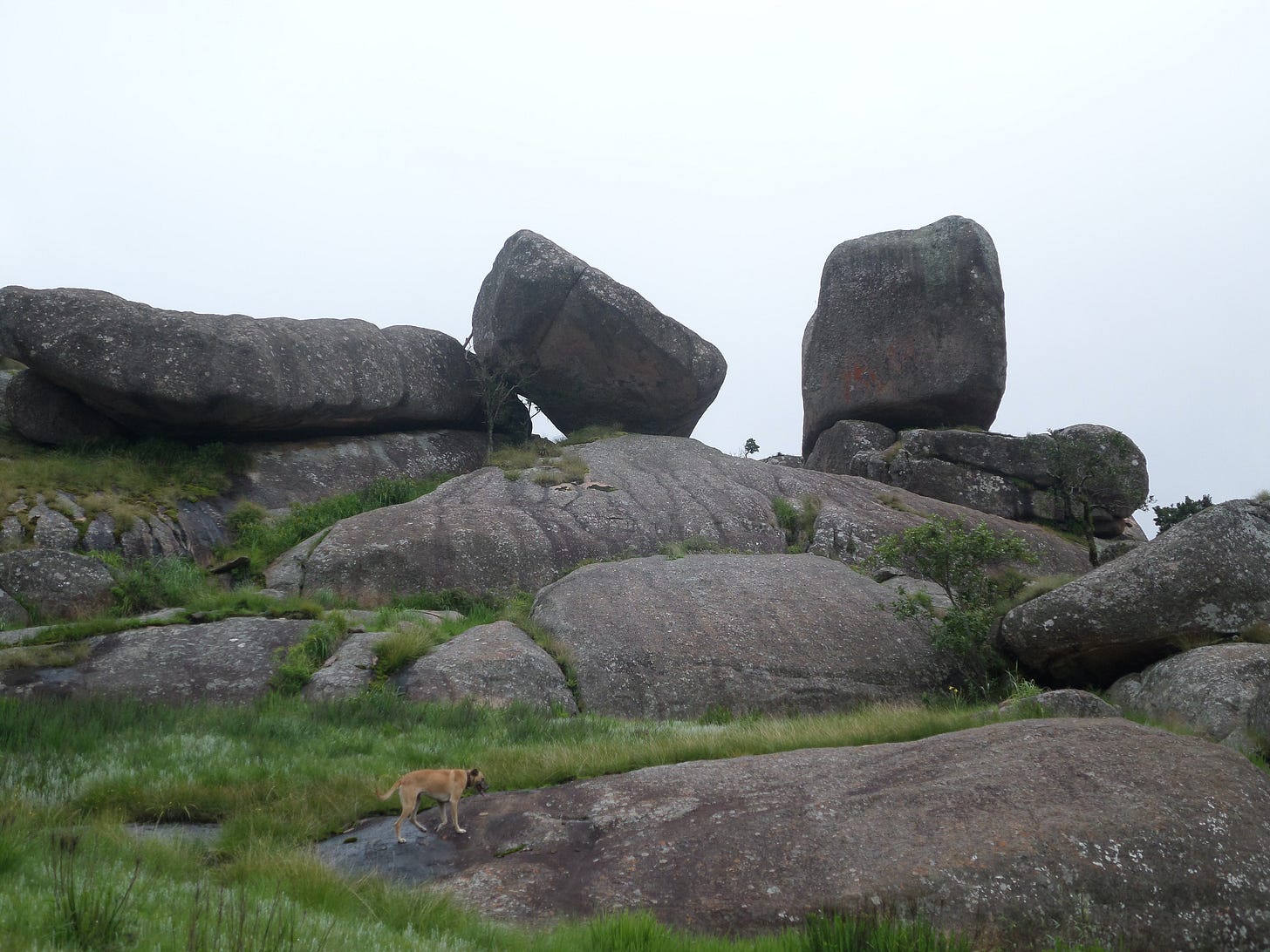
I asked him what his neighbours thought about all this. He told me many people didn’t understand his desire to acquire this land, since it wasn’t typically suited for growing common cash crops like maize. His business idea was to develop a camping ground and a little restaurant where people could eat a healthy meal and drink good coffee for an affordable price; he was a head chef many years ago, and cooked us up some really tasty dinners during my stay. But on top of it all, Warren considers himself a rich man, being surrounded by such beautiful flora and free access to the freshest spring water around. Working together with Jason and a few other neighbours and landowners in the region, Warren aims to turn this little slice of paradise into a nature reserve, along with the neighbouring lands around Sibebe Rock, protecting all kinds of endangered indigenous species. He also dreams of introducing some wild animals like zebra and kudu to the area, which are native to Eswatini.
The realisation of these dreams, however, faces a growing problem. As we huddled over the small coffee table in Warren’s living room, teas in hand (he was out of his favourite coffee), we discussed the weather. Outside was still misty and rainy, cold enough for us to have jackets and coats on, despite the summer solstice. Warren explained how the rains have, in recent years, begun to fall more unpredictably, later in the year, and heavier, bringing with them cooler summer temperatures here in the hills and affecting planting season for local farmers. Sure enough, the mountainous Highveld in Eswatini’s north and west experiences an annual mean rainfall of about 1500mm – around 1000mm more than the eastern lowlands. It’s no secret that Sibebe Rock, in the northwestern Hhohho Region, is among the wettest places in the country. But climate research predicts a continuing trend of more unsettled weather and more frequent storms in the region, bringing with them heavy rainfall. This is linked inextricably to climate change, and Warren can feel it.
In recent years, cyclones in the region have devastated crops and residential property, damaging mud-brick homes that local residents have had to reconstruct, according to Warren. The scale of the problem is undeniable – for example, in January 2021 Cyclone Eloise resulted in around 182 million Swazi emalangeni (SZL), about US$11.4 million, in economic losses. Rivers have burst their banks, at one time causing the footbridge at the bottom of Warren’s property to become impassable due to the gushing water. He had never seen this happen before. Furthermore, soil erosion is a growing problem due to heavier and more frequent rainfall events, which damage already vulnerable road infrastructure and worsen trenches and gullies along the dirt mountain tracks. After a recent three-week spell of constant rain, Warren took it upon himself to reconstruct some of the local paths damaged by erosion. On another occasion, he helped reconstruct the road leading to the nearby Sibebe Resort so children could reach school in the local khumbi minibuses. Warren expressed frustration with the slow pace of transport infrastructure development here. This leaves the local population more vulnerable to climate hazards related to extreme weather, including flooding and landslides, dangerous road conditions, and diminished access to hospitals and other vital infrastructure.
Warren explained that increased rainfall in the area has frequently resulted in water-logged soil, increasing the vulnerability of crops to disease or even causing them to fail. With about 75% of Emaswati living in rural areas, many of whom depend on subsistence agriculture for their livelihoods, this heightens many people’s vulnerability to climate-induced deluges. Warren himself has noticed more and more people move onto the surrounding lands to make a living from cash crops, namely maize. Although maize has a higher tolerance to increased groundwater than other common cash crops like millet, the higher likelihood of extreme rainfall events in the Highveld puts these subsistence farmers’ crops at risk of failure, enhancing residents’ climate vulnerability. Warren’s indigenous gardens are safer due to the plants’ generally higher capacity to store water, but even some of these plants have shown signs of water-logging and deterioration this wet season. Ultimately, this underscores the necessity of adapting to inevitable climatic changes and, as recent research has highlighted, ‘building and disseminating adaptation knowledge to adjust to a warming world.’
The next morning, Warren left early to attend to commitments in town. When he returned, he’d brought back some chicken breasts on skewers, which he marinated beautifully for lunch. With our bellies full, we went for another walk around his gardens. Warren explained how he only cultivates the indigenous plants from his land, gathering them with topsoil to be propagated around his home. But there’s one plant that he considers a rising nuisance. A type of Australian wattle is found everywhere on these hills – its wood is often harvested for fuel and building material for things like fencing. The wattle, however, is invasive in Eswatini and is putting pressure on the region’s indigenous forests, which are endangered and shrinking. Warren told me that these trees are taking over the land and use up a lot of groundwater that indigenous plants rely on, particularly in drier periods. Indeed, Eswatini has recognised that climate change has ‘created favourable conditions for the rapid growth and survival’ of invasive species, and that these plants ‘threaten to increase the risk of extinction of indigenous species’. This only exacerbates the pressures climate change places on Warren’s native gardens.
That being said, Warren and his crew of conservation-minded neighbours have taken steps to adapt, reducing the spread of wattle on the land, cutting back wattle forests (selling the fuelwood for revenue), and ensuring they cultivate only plants native to the area. Warren indicated that his indigenous plants are generally less prone to waterlogging and are well-positioned to restore degraded land, secure soil against erosion, and offer resilience against vulnerabilities to soil health and biodiversity posed by non-native plants. Some other local residents, however, frequently burn wattle to make room for crops, or even to propagate the wattle itself in order to sell it. In fact, Warren mentioned that burning one wattle plant makes space for the proliferation of ‘millions’ more, heightening the threat of encroachment by these invasive plants on his gardens.
That afternoon, I went for a hike to reach Sibebe Rock. Warren advised me to climb right up to the top of the hill and just go straight along the ridge until I arrived at the Rock. I did just that, and got utterly lost in the increasingly thick fog that was descending rapidly on the mountainside. I reached Sibebe after a magical trek through fog and disfigured boulders, but completely lost my bearings on the way back, and daylight was becoming scarce. I tried to retrace my steps, but the mist made it impossible to find the mental waypoints I’d made on the way there. Ultimately, I had to knock on a neighbour’s door to ask for directions (I had no phone service at all). A family of two women and two small children kindly accompanied me to the paths leading to Warren’s place. I thanked them and hastily made my way back to the gardens.
Warren was finishing up some gardening when I returned, dressed in his typical Bavarian attire. Relieved to see me, he exclaimed that he was worried I wouldn’t make it back in this fog. Into the cabin we went, and we lit the gas burners for tea. Burning: a common problem, at which Warren made little attempt to conceal his anger. In addition to wattle burning, local people here (indeed, in Eswatini generally) routinely burn agricultural waste. Moreover, due to poor waste-disposal infrastructure, plastic and household waste are frequently burned, often in open pits dug into the ground. This contributes to rising levels of CO2 and other pollutants in the atmosphere, in addition to numerous other environmental hazards caused by plastic litter, such as the blocking of drainage systems necessary to overcome flooding due to increased storm severity and frequency.
Warren has noticed the decline in air quality, pointing to the smoke rising from the city and suburbs. In a telephone interview after my trip, he questioned how it’s possible for him and his neighbours to save the environment when so many people still burn and litter this way, which contradicts Eswatini’s recognition of the need to reduce the open burning of waste in the country. He explained how plastic and household waste can easily be reused for agricultural and decorative purposes, which he himself has employed bountifully in his gardens, e.g., reusing an old washing machine drum for a fire pit. He mentioned that soft plastics can be reused as soil sacks to cultivate tree seedlings. Going further, he explained how food and agricultural waste (such as crop residues and excess grass) could be used to create sustainable and affordable compost to protect crops and ensure harvests. Food waste can also be employed to promote compost creation from worm excrement, as some of his neighbours have done, and have even started to sell this organic compost. These techniques would also reduce reliance on compost and fertilisers sourced from outside the community, which can be more expensive.
Nevertheless, Warren admitted that it’s hard to find people who share his mindset, despite his circle of friends with similar interests. According to one survey, about 54% of rural Emaswati aren’t aware of climate change. Of Emaswati aware of climate change, 90% believe that it’s the developed nations who must act to limit it; only 7% of 2025 respondents believed that it’s ordinary citizens who are primarily responsible for limiting it. However, ‘substantial numbers’ of Emaswati ‘report having to adjust their lives in response to changing weather patterns’, while 60% experience medium to high vulnerability to climate hazards.
Warren explained that many local people are unaware of sustainable techniques they could employ to reuse waste, reduce burning, cultivate indigenous plants, and generate organic compost, all of which help reduce their vulnerability to the changing climate. These practices limit emissions of CO2 and other atmospheric pollutants, reduce hazards posed by plastic litter and invasive species, and increase community self-sufficiency and resilience to more unpredictable weather patterns. Emaswati are, of course, right to acknowledge developed nations’ responsibility for climate change; these nations account for the largest share of cumulative greenhouse gas emissions since 1850. Developed nations evidently must act now to limit catastrophic climate change globally. Furthermore, Warren’s practices might not be enough on their own; the Swazi government must certainly hasten the development of essential infrastructure to improve communities’ climate resilience. Nevertheless, deep knowledge about indigenous species and permaculture techniques, which Warren clearly possesses, can help the community build an accessible and affordable bulwark against climate hazards. Indeed, researchers highlight the United Nations Environment Program’s emphasis on how ‘knowledge, whether it be technological, ecological, or economic, is a fundamental requirement for adapting to climate change’, while others observe that Indigenous knowledge has ‘contributed substantively towards climate change adaptation.’
Ultimately, it’s clear that grassroots efforts like those of Warren and his friends to adapt to climate change based on local knowledge are possible and can be impactful in these communities.
While researchers have found that beliefs about adaptation options drive much of the process of climate change adaptation, Warren has faith that, although it will take time to share these environmentally friendly practices and knowledge, it takes just one person to act for others to follow. He acknowledges that many people in the area are interested in what he has to say about protecting the environment and believes the community can come together as a team to adapt to inevitable climate change at the grassroots level.
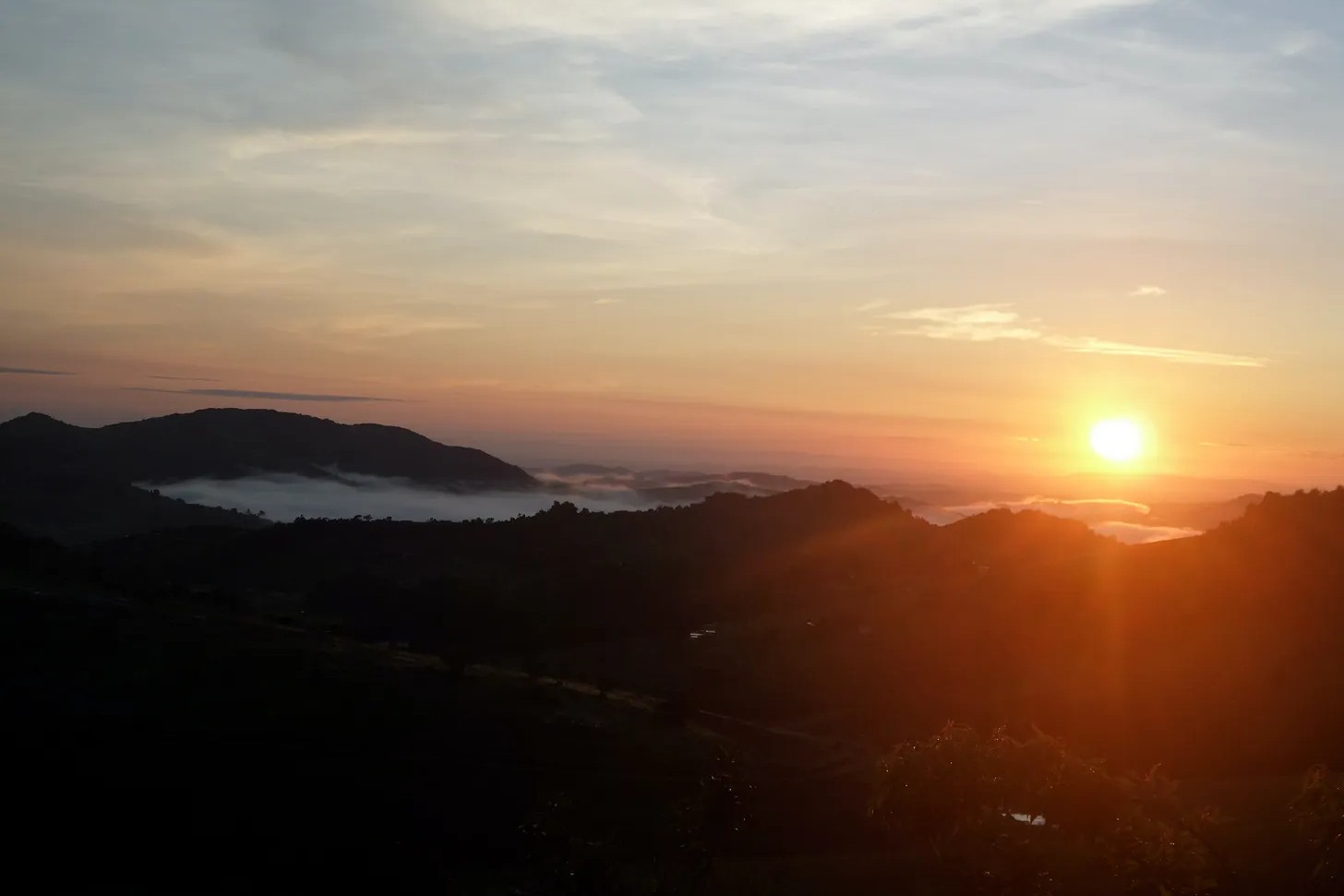
On my final morning at his gardens, the sun shone brilliantly as low-lying clouds drifted through the valleys. I looked back at his land one last time as we ascended the trail to the khumbi stop, and I was awestruck by its beauty. I extend my best regards to Warren and the community as they adapt to the changing climate here, and I’m confident that his gardens will thrive in the years to come.


Comments
We changed commenting systems on September 10, 2026 as part of a site-wide functionality and security upgrade. Your past comments have not disappeared, and you can still log in with your old Disqus account credentials if you wish. Contact us with any questions.