

The oil-dependent world is in crisis. Ship traffic in the Strait of Hormuz – through which more than a quarter of global seaborne oil trade and a fifth of the world’s liquefied natural gas flow – is at a virtual standstill. Oil prices have climbed, briefly topping US$119 a barrel.
The largest release of oil from countries’ strategic reserves in history is under way, in an effort to ease prices. But even so, billions of people are dealing with surging energy prices and spiking food and fertilizer costs. Governments are scrambling for alternatives, too. To reduce energy demand, Sri Lanka has declared every Wednesday a holiday for public officials, Myanmar is limiting private vehicle use to every other day, and Bangladeshi colleges have canceled classes.
Leaders of South Korea and the European Commission have used the current energy crisis to call for accelerating the shift away from fossil fuels and toward homegrown renewable sources. U.N. Secretary-General António Guterres put it plainly in a March 10, 2026, social media post: “There are no price spikes for sunlight and no embargoes on the wind.”
I grew up in a coal-mining town in Turkey. I now study energy transitions across the Middle East and North Africa in a research project I co-lead at Harvard University. I have seen that a country’s desire to increase renewable energy is not the same as a plan to do so.
The very region embroiled in this war reveals that there is not a linear shift from fossil fuels to renewable sources. Rather, there are distinct trajectories, driven by energy dependence, fiscal pressures, governance and stability. Disruption at the Strait of Hormuz does not mean the same thing in Riyadh, Saudi Arabia, as it does in Ankara, Turkey, or Baghdad, Iraq.
The petrostates hedging both sides
For Saudi Arabia, the United Arab Emirates and Qatar, this crisis is a warning dressed as a windfall.
Oil prices have surged, which in theory means higher revenues. But the very infrastructure that produces and delivers that wealth is under direct attack. Iran has targeted oil refineries and shipment centers across the Gulf. The Strait of Hormuz closure is simultaneously choking off their ability to get product to market, exposing how vulnerable the infrastructure of fossil fuel wealth can be.
All three countries have also committed to boosting renewable energy production. In Saudi Arabia, for example, the government aims for renewable energy sources to account for 50% of electricity generation by 2030, up from just 3% at the end of 2023.
Saudi Arabia’s biggest group of clean energy companies has pledged to spend $17 billion on solar and wind – across all their projects, spread out over several years.
But those efforts sit alongside vastly larger investments in fossil fuel production. In 2025 alone, the country’s nationally owned oil company, Saudi Aramco, spent $52.2 billion building new oil and gas infrastructure.
This is not a contradiction. It is a strategy built on the assumption that the world will keep buying fossil fuels for decades to come. The current crisis reinforces that assumption, but it also exposes its vulnerability: As war drives up oil prices, every oil-importing country is feeling the cost of continuing oil dependence. And every stranded export proves the energy transition can’t wait.
Price shock and necessity
Energy-importing countries such as Jordan, Morocco and Turkey are investing in renewable energy for a different reason: Fossil fuel dependence is bankrupting them.
Turkey imports over 70% of its fossil fuels, including virtually all of its natural gas, 17% of which comes from Iran. Natural gas accounts for less than a fifth of electricity generation, but it is the backbone of the country’s heating and industrial sectors and a major concern if supply falters. Turkey’s energy import bill is climbing at a time when the economy is already under strain from rising borrowing costs and weakening currency value.
Jordan, which historically has imported over 90% of its energy, faces similar pressure.
But these countries would be in far worse positions had they not already been investing in alternatives.
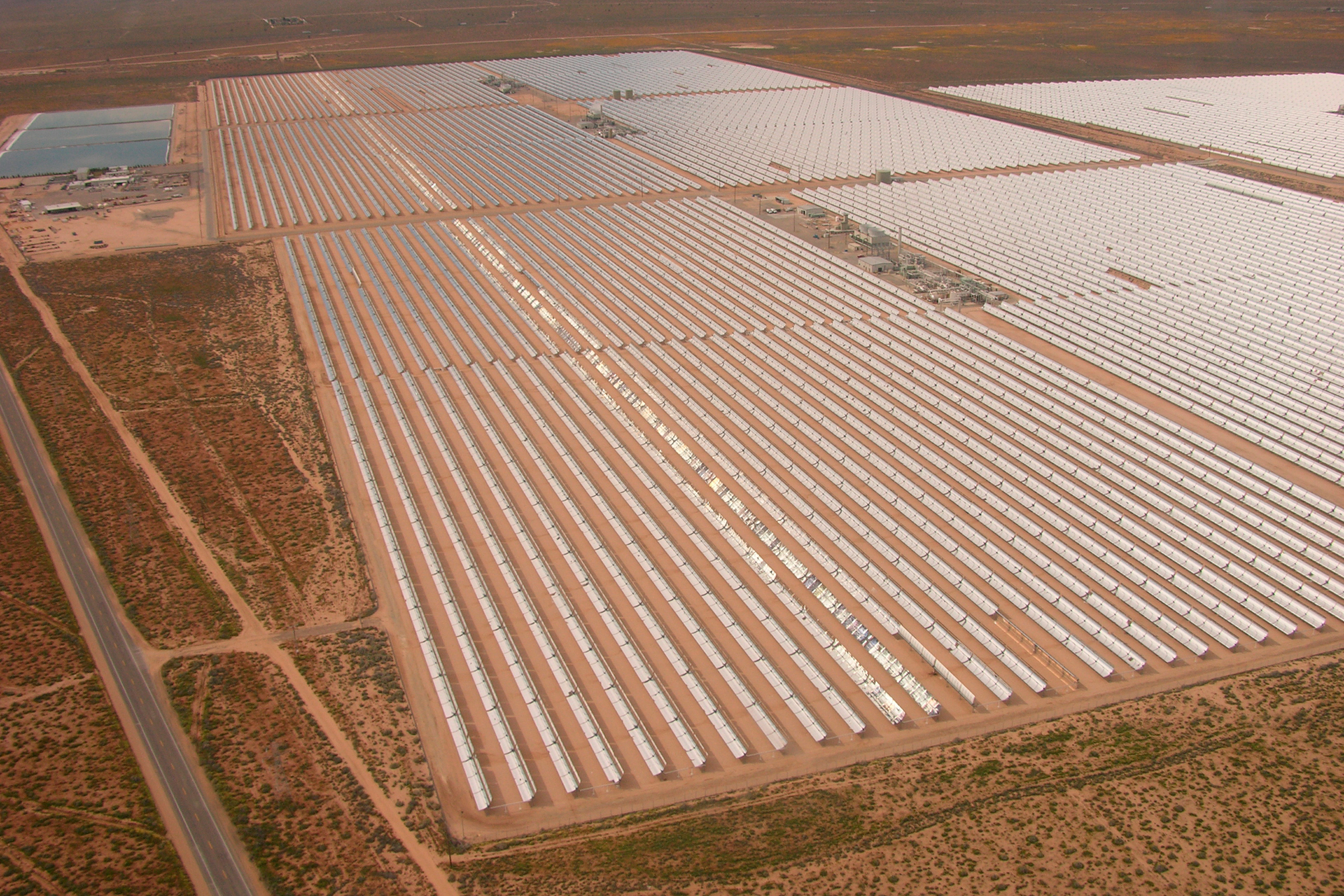
More than half of Turkey’s installed electricity capacity now comes from renewable energy sources. Morocco built one of the world’s largest concentrated solar facilities, and renewable sources now supply 25% of the country’s electricity. Similarly, Jordan has gone from virtually no renewable electricity to renewable sources providing more than a quarter of its power in roughly a decade.
The current war has vindicated their investments in renewable energy – though the vindication has limits. The same crisis that proves the value of renewable energy investment also raises inflation, tightens credit and strains the very public finances these countries need to keep building.
Every kilowatt-hour generated by a Turkish wind turbine or a Moroccan solar panel is one that does not depend on a tanker passing through the Strait of Hormuz. But the financial pressure means building the next renewable generating project just got harder.
Crisis upon crisis
Then there are countries where this war lands on top of existing emergencies.
Iraq, the second-largest oil producer in the region and in the Organization of the Petroleum Exporting Countries, depends on Iranian gas imports to generate much of its electricity – a supply line now directly threatened by the war. Oil exports through the southern port of Basra, on the Persian Gulf, fund roughly 90% of Iraq’s government revenue. If those revenues are disrupted, the government may be unable to function. Iraq already suffers chronic electricity shortages and has virtually no renewable energy capacity to fall back on.
In Yemen, Libya and Syria, energy infrastructure has been damaged or destroyed by years of conflict. These countries import fuel at global prices to run generators and keep hospitals lit. Every dollar added to the price of oil makes that harder. For them, this war is not pointing out reasons to shift to renewable sources: It is threatening energy access itself.
An international challenge
In November 2026, the U.N.’s annual climate summit comes to the region at the center of this crisis, with Turkey as host.
The war in the Middle East has made a powerful case for the economic, political and humanitarian benefits of transitioning from fossil fuels to renewable energy sources. But it has also exposed something the global conversation consistently misses: Different countries are heading in different directions, based on their own circumstances, many of which predate this war.
Understanding those paths matters because it reveals what countries’ promises cannot: where the real barriers are, where the incentives already exist, and where support would make a difference – before the next disruption hits. In my view, this war has helped win the argument about whether to shift to renewable energy, but it has also highlighted a harder question: What does it actually take to build those sources, country by country?



Comments
Welcome to the new Resillience commenting system!
We have moved from the former Disqus commenting system to a new system as of September 10, 2026.
We made this change because of privacy concerns regarding Disqus. It's also part of a set of changes to bring more services to the Resilience community under a single login: commenting, (coming September 2026), and online courses (coming 2027). Unfortunately, your old Disqus comments may not reliably link to your account in this new system. Please contact us if you have any questions or concerns.
One of the failures of current economic theory is the idea that the energy transition will get easier the higher energy costs go.
But because energy is needed for all new energy infrastructure, the transition actually becomes physically more difficult as EROI falls and shortages appear. It becomes more politically acceptable, but more physically difficult.
CERA was right about the bumpy plateau of oil production. Who knows when geologically or politically driven price increases will begin to rise fast enough to sink demand (mostly by causing the misery of doing without). The date is private and we will not know.
One way to ease this transition is to create a second govern mentally established and lower interest rate for building infrastructure that lowers energy demand and provides renewable energy. Renewable energy and insulation must pay the full investment of energy up front. And interest is charged on those loans. Fossil fuels pay only a fraction of the EROI cost up front, then fuel is consumed over time. Thus fossil fuels have a Net Present Value advantage over conservation and renewables. This is just a side effect of our cultural economic calculations not matching our current physical conditions.
It is like people huddling together in churches to pray for deliverance from the Black Plague. A deadly mismatch between culture and the physical world. Some nations will figure it out and do better, and others will not, and do worse. Sadly, for the USA, we are ruled by the fossil fuels companies that were so helpful in building the wealth of the last century. So we are likely to be as trapped on oil's downward trajectory as the UK was on the downward trajectory of domestic coal production.