

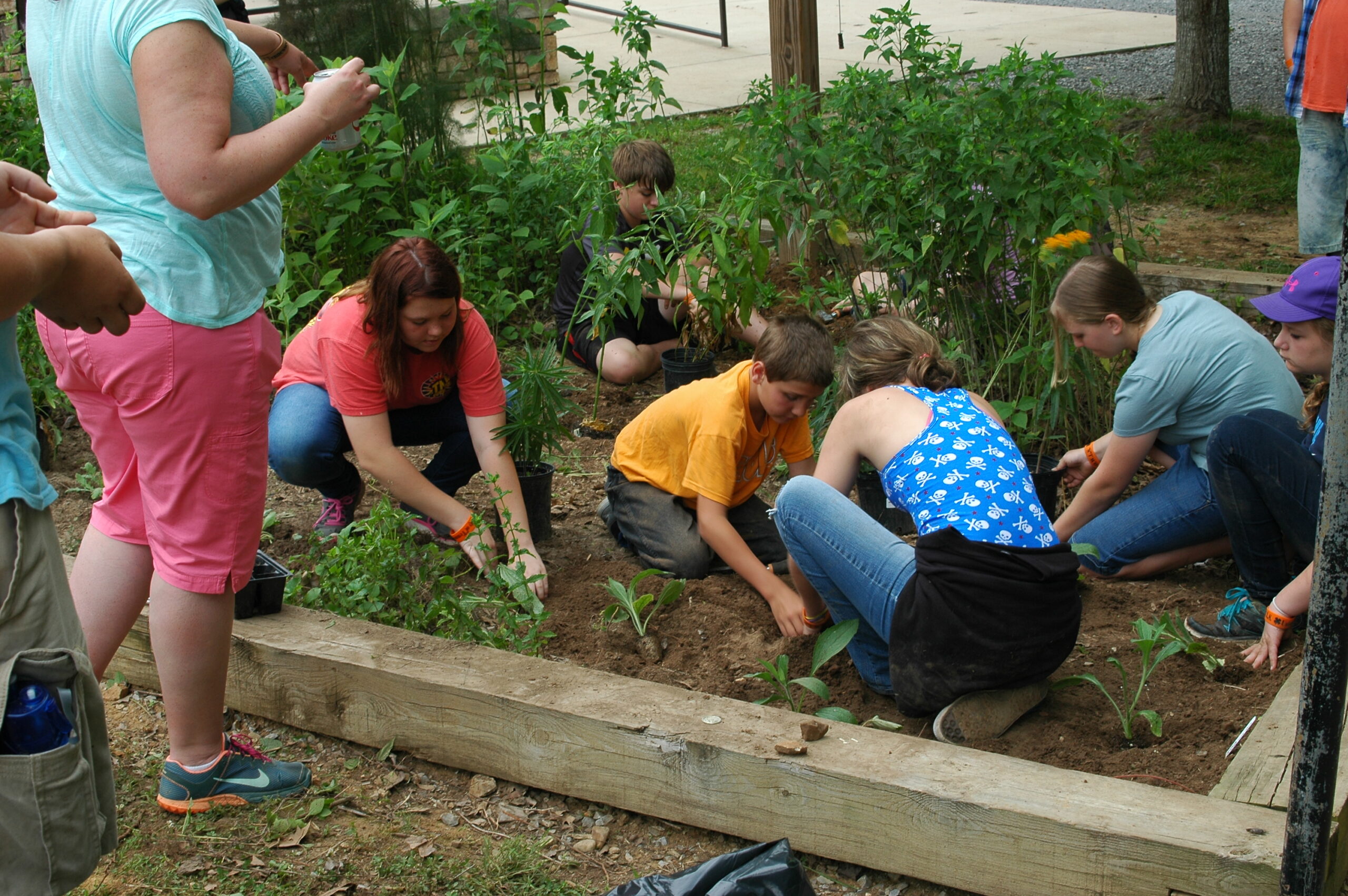
You might think it’s human nature to be selfish – and you might offer a random sampling of any day’s news as evidence that it’s true.
But it’s not. For sure, we are often selfish and greedy, and our selfishness sometimes pushes us off the rails into dire things like fascism, but the impulse to be kind and cooperative is as old as the hills. Indigenous people all over the world still live by these values, as do most of the rest of us. Some people prefer to live by a code of selfishness, but most do not. They prefer a code that tells us to help each other.
If you can temporarily imagine away the billionaires, the oligarchs, the election-defeat deniers, you will find that most people are cooperative. Think of the orchestras, the sports clubs, the friendly local businesses. Think of your friends and neighbors. The smaller the community you live in, the more cooperation you will find. If someone’s roof is blown off, the neighbours will soon be there to help. For sure, there will always be some who need to assert their self-importance and try to claim power, but they are the minority, not the whole.
Life simply goes better when we cooperate and get along with each other. Speak to anyone who has travelled the world on foot or by bike, and what do they say? How incredibly kind people are.
In 2015, Britain’s Common Cause Foundation surveyed people about the values they lived by. 74% preferred cooperative values such as helpfulness, equality, and protection of nature, regardless of age, gender, religion, or political preference, while 26% preferred status values such as wealth, public image and success.
Even in a big city, where it’s easy to feel anonymous, one small change can bring out the cooperative spirit among neighbors
Even in a big city, where it’s easy to feel anonymous, one small change can bring out the cooperative spirit among neighbors – removing the traffic from residential streets, or slowing it down to walking speed by means of physical obstructions. The children feel safe to go outside and play together, and the grown-ups to chatter and gossip, building trust.
Our evolutionary story – the one we share with fleas, frogs, and ferrets – is chock-a-block full of cooperation. Nature may be red in tooth and claw, but it is also blue in soothe and paw.
Two billion years ago, single-celled organisms began cooperating in the process we call endosymbiosis. All complex life exists because of cooperation. When a cell ceases to cooperate, we call it cancerous.
Plants do it too. Around 400 million years ago, they began to cooperate with fungi through shared underground mycorrhizal networks.
Evolution’s great lesson is not “survival of the fittest,” but “survival of the most cooperative”.
Evolution’s great lesson is not “survival of the fittest,” but “survival of the most cooperative”. Our close ancestors, the chimps and bonobos, cooperate in every aspect of their lives, even while they are being dominated and bullied by a tough alpha male.
For hundreds of thousands of years, our hunter-gathering ancestors lived cooperatively, taking care to suppress self-importance and egoism, which they knew would lead to bullying and domination.
For many years, proponents of Richard Dawkins ‘selfish gene’ school of biology insisted that the only form of altruism that was genetically possible was reciprocal altruism within the extended family. It is now understood, as the cultural biologist David Sloan Wilson puts it, that “selfishness beats altruism within groups. Altruistic groups beat selfish groups. Everything else is commentary.”
Cooperation is the chief architect of evolution. Members of cooperative groups are more successful than selfish individuals, so they pass on more of their genes.
When our ancestors settled down in villages, their cultures remained cooperative for thousands of years. They had to fight to defend their lands, but within each clan, they lived cooperatively. It was only when successful families demanded and won the right of inheritance, giving each successive generation more power and wealth, that cooperation was forced, by violence, to take a back seat to domination, kicking off 5,000 years of kings, lords, and conquerors, each striving to be grander and more self-important than the other.
Across the world, however, within the kingdoms and empires, people continued to cooperate at the neighbourhood level. Merchants cooperated over huge distances. But whenever people rose up in a peasants’ revolt or a slave revolt, demanding freedom, they were invariably crushed, and frequently killed. The cooperative impulse may have been suppressed, but it was never defeated, for it is such a persistent aspect of our human nature, as the Canadian historian Alvin Finkel reveals in Humans: The 300,000-Year Struggle for Equality.
In the 16th century, when the Catholic Church was telling people in Europe what they should believe, enforcing obedience with torture and burning, scientists like Copernicus, Bruno and Galileo challenged their monopoly over knowledge.
In the 17th century, scientists cooperated to form the Royal Society in Britain and the French Academy of Sciences, giving the challenge to dogma and irrational thought a solid foundation in science.
In the 18th century, the impulse to pursue reason rather than religious dogma found voice in the Enlightenment.
In the 19th century, following the French Revolution, the desire to cooperate found a voice in street uprisings, workers’ cooperatives, community banks, mutual aid societies, labor unions, and increasingly determined demands for democracy.
In the 20th century, it found expression in the New Deal, social democracy, and the welfare state. In Finland, fully 20% of the economy is cooperative. Finns happen to be some of the happiest people in the world.
Today, we stand at a crucial threshold.
The élites are as determined as ever to hold onto their power and wealth, but ordinary people are hungry for change.
For 500 years, we have been led to believe that capitalism is the only kind of economy that works. But it is not working. Its leaders are destroying nature, causing climate chaos, undermining communities, and creating loneliness, all in the name of selfish capital gain. If that is “working”, we need something better.
We can find it in the economics of kindness, which takes the golden thread of cooperation and uses it to weave a new economy based on mutual respect and working together, without domination by others.
Just us, building a new world, together.





Comments
Welcome to the new Resillience commenting system!
We have moved from the former Disqus commenting system to a new system as of September 10, 2026.
We made this change because of privacy concerns regarding Disqus. It's also part of a set of changes to bring more services to the Resilience community under a single login: commenting, (coming September 2026), and online courses (coming 2027). Unfortunately, your old Disqus comments may not reliably link to your account in this new system. Please contact us if you have any questions or concerns.
Maybe, but we don't know this level of detail for how hunter-gatherers lived, so this is just opinion.
Right, just as happens now. It's just that the definition of "clan" and "territory" varies.
Where cooperation is a benefit, the genes get passed on. Where it isn't, the genes don't get passed on.
We need to face reality. There is no way our industrial technological civilisation will move towards being a cooperative civilisation. Indeed, since the civilisation is inherently unsustainable, there will likely be less opportunities for cooperation beyond clans as our way of life begins to unravel.