

Show Notes
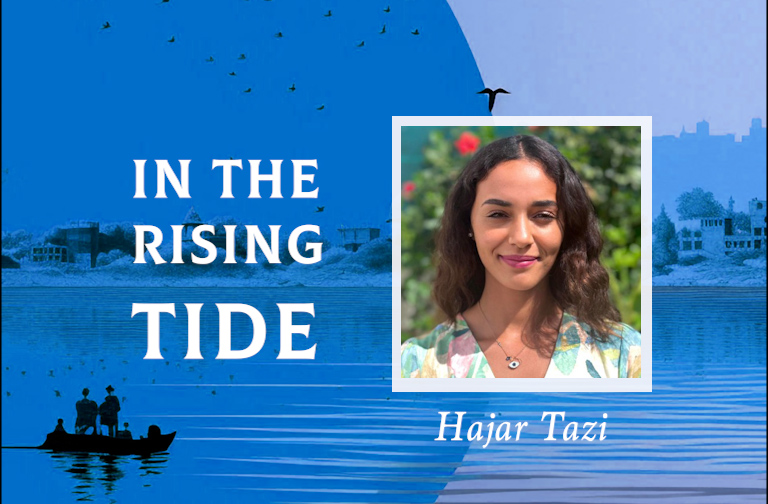
In this episode, we travel to Morocco to speak with storyteller and ecosystem weaver Hajar Tazi. Working across a wide network of organizations—from Shareable and Gaia Education to the Wellbeing Economy Alliance and the Post Carbon Institute—Hajar helps connect people, ideas, and communities in service of a more resilient future.
Like Louise in the previous episode, Hajar’s path hasn’t been linear. We explore what it means to follow curiosity across disciplines and cultures, and how unexpected turns can lead to deeper purpose. Influenced by the work of Joanna Macy, Hajar reflects on living in a time of both unraveling and transformation—and shares her visions for what a more hopeful future could look like.
This series was made with support from a grant from Omega Resilience Awards, a project of the nonprofit Commonweal. Find out more at ORAwards.org
You can learn more from Hajar at her substack Remembering the Future.
You can hear more from Alex at Human Nature Odyssey.
Please subscribe wherever you enjoy your podcasts and leave us a review.
Citations
In The Rising Tide is hosted and produced by Alex Leff, in collaboration with Resilience. This series is made with support from a grant from Omega Resilience Awards, a project of the nonprofit Commonweal. Find out more at ORAwards.org.
Transcript
Alex Leff (00:03.532)
It's time we come together, share stories, and meet the unprecedented times we live in. Welcome to In the Rising Tide. I'm Alex Leff. Thank you for being here. In this five-part mini-series from Resilience, in collaboration with the Omega Resilience Awards, we hear stories from around the world that reveal a different face of the interconnected unfolding crises of our time.

and the people taking meaningful action on their land and in their community. We're in good company. In this episode, we travel to Morocco and speak with Hajar Tazi. Hajar is a storyteller and ecosystem weaver. We'll learn with that in soon. She works with organizations around the world from Shareable and Gaia Education to the Global Council of the Wellbeing Economy Alliance, the EcoCiv Coalition, Post Carbon Institute,

where I also spend time, and the Synergy Institute. Like Elise in the episode before, we discuss navigating your own life path through unexpected twists and turns, following your curiosity and passions across disciplines, careers, and communities. Azhar's been influenced by the scholar and activist Joanna Macy and her concepts of the great unraveling and the great turning.

We also talk about Hajar's visions of potential positive futures, but you'll hear all about that soon. If you enjoy In the Rising Tide, make sure to follow us wherever you go for your podcasts so you'll catch our three future episodes too. This series was made with support from a grant from Omega Resilience Awards, a project of the nonprofit Commonweal, and an association with resilience.org. Each episode will come out a week apart.

Okay, here is the conversation between me, Azhar, and you.

Alex Leff (02:10.679)
I want to talk with you today about home and how the journey of leaving and returning changes who we are. so starting with home, where I grew up in this suburb outside of the city, I felt really disconnected from being in any like real place. know, everything is covered in concrete and there was this country club down the street for me that when I was in high school became abandoned and

I got to watch the golf course turn to a meadow and the private pool became like a lily pad filled pond with frogs. And I spent a lot of time exploring there and it felt like the only place that was really like a homeland, like a place that I felt really connected to and that I belonged. And I'm wondering if there was a moment or a place in your childhood where you

felt truly at home. You belonged, like you were maybe connected to something larger than yourself.

Hajar Tazi (03:17.398)
Yeah, that's such a beautiful question. And I think two sort of places come to mind and heart. The first one was my grandma's house. My grandma passed away about two years ago, but she used to have this beautiful garden. And every summer, my mom would drop us off over at her place.

And all my cousins would be there. We were supposed to spend about one or two weeks with grandma, but it always ended up being the entire summer because we just would not want to leave. And it kind of felt like an island of coherence in a sea of chaos. Spending the entire year sitting down at school, being told what the world was, being told how to be a good citizen, a good person, and then being unleashed.

in this beautiful garden and just getting to actually sensorially meet the world and together with my cousins. We would just explore and for hours on end would play with each other, with the dogs who used to live with my grandma. And then grandma at the end of the day would just gather us and tell us stories. And so that felt like such a beautiful, deep connection with place.

with that local ecosystem of fauna and flora, but also a very deep connection with my ancestral lineage. And the stories grandma would tell would weave together human beings with animals who used to talk and have superpowers. And she just breathed life into everything around us. And often she would do that as she braided our hair, the girls.

And so it was just this beautiful ritual of weaving stories and fusing life into them while she also braided our hair. And the second place that came to mind was the ocean. I've always had a very special relationship with the ocean. I used to feel homesick growing up, up until the point I started surfing. And so every time I would

Hajar Tazi (05:40.824)
be on my surfboard, watching the sunset with this total stillness and silence around me. There was just this sense really deep in my bones that I belong on this earth, that I belong in that present moment. And it used to feel very magical.

Alex Leff (06:04.536)
When you speak about feeling homesick, even before you found your home, what did the homesickness feel like? Was that something you were conscious of feeling that you put that word to? Or did it only become apparent once you experienced that sense of feeling home?

Hajar Tazi (06:21.666)
So I do experience the sense of feeling home, but it's always imbued with a sense of being homesick. That's never left me ever since I was a child. And I used to tell my parents about it, that I don't feel like I came from here. And I think it's really odd every time I try to put it into words, but it's the very experience of incarnation.

which feels strange to me. It's as if I was able to remember a time before time when I did not used to be incarnated in physical form. And I'm curious whether you've also had this sense or yeah, thought this thought before.

Alex Leff (07:10.318)
I think that, no, I think I was convinced I I bought into the ego that I was born into, I think, but I resonate with the homesickness sense growing up feeling like the land that I'm growing up in isn't much of a land to really explore. you know, I'm not eating any food that is actually coming from it. I'm barely getting to play around it. You know, it's very strict, like what's off limits and most of it is off limits.

And the people around me, my peers and the teachers just act like this is totally normal. And it just seemed like this is, this doesn't feel like a good system. And even as a kid, I felt that. And so I think my estrangement or homesickness was about that primarily. sounds like for you, it was almost like metaphysical. I know you talked about.

visions you had as a child that really impacted you? Is that part of the similar feeling? that lead to you experiencing this? What were those visions and how did that impact your childhood?

Hajar Tazi (08:21.868)
Yeah, I don't know if they were visions per se. I feel like they were more sensorially a sense of dissolution of self, of melting of the self into the place I was in or the people I was surrounded with and really feeling their emotions. So I would say that the best way to put it into words and again, these experiences are really, really tough to express.

But it's that instead of feeling like I was part of the earth or part of the web of life, I would feel myself as the web of life. And I think that, yeah, that there is just this sort of ontological flexibility, which oddly enough I've recognized in some of my friends who have been diagnosed as neurodivergent as being on the spectrum of autism. And so it's just this.

ability to recognize oneself as the physical manifestation that we are at this very present moment, but to also recognize ourselves as much more expensive, being simultaneously Hajj and Gaya and the cosmos. And life gets pretty fun when you can tap into that. And I think it's also something that can be cultivated through meditative practices and so on.

It gets pretty fun unless it kind of catches you off guard when you least expect it. And you still have to sort of perform as this character that you are in 3D, but you find yourself unable to like ground in this very physical body and persona. And that happens quite often and it can be a bit, a bit challenging.

Alex Leff (10:15.5)
sounds potentially disorienting despite the gift that comes with it. So you make friends with people who give you the language of neurodivergence to explain. I'm curious, like what language you had as a kid to understand what you were experiencing. Did anything in your grandmother's stories give you context for that? Was your family supportive of this or was that also part of what made you feel a little bit homesick or a stranger to some extent?

Hajar Tazi (10:42.636)
I did not have any language nor conceptual framework to conceptualize this or to talk about it. And I just used to feel like a misfit, weird. And I think it's only when I stumbled upon philosophy when I was about 15 years old and started really diving deep into Western philosophy first and studied Eastern philosophy and spirituality in college that I

actually started picking up those jewels of wisdom that enabled me to actually put words into the experiences I used to have as a child. then poetry, especially from Mary Oliver, from Moomi, so mystics mainly, that just, yeah, really give me that sense of feeling at home and feeling like I belong and like maybe I'm not.

that much of a weirdo. I'm probably a weirdo, but I'm not the only one at least.

Alex Leff (11:44.078)
Mm-hmm, and good company. Yeah. Well, so then something about that I think many of us share growing up when we did, regardless of where in the world it was, I also felt this connection to the natural world inherently and a deep care for it. And part of our experience is learning about the wonders of the natural world growing up at the time we did is that you also

are learning about that it's in trouble. And I remember, you know, for me, was like learning that something called an iceberg existed at the same time I was learning that they were melting. And I'm curious how you first learned, encountered some of these, you know, very painful realities and incorporated that into, you know, if you were already experiencing yourself as

Gaia at times. How did you experience the pain? I know, you we'll talk eventually about the great unraveling. But before the language of all that came in, I'm curious how you first encountered that.

Hajar Tazi (12:58.306)
I think oddly enough, what's coming up for me is more like social inequalities that I experienced as a child. used to go to this beautiful beach every summer and I would see this other child who was probably the same age as I was, another girl, and she used to be carrying wood, picking it up from the little woods near the beach.

taking it back to her parents to do something with it. And I just, could not understand this notion of privilege and why I got to go play in the ocean while she had to be working. And it just created so much, I think confusion on the one hand, that was then followed by anger when I got to my teenage years. So even though this was more towards

you know, another human being, it was the beginning of witnessing these hierarchies and hierarchies of worth depending on different social classes and so on. I think my climate change awareness only started building up more towards college. And my reaction to it was just, I was appalled. I could not understand how.

we were destroying the very thing that was nourishing us and keeping us alive. And at the same time, I did not understand how we could not see ourselves as part of the body of Gaia, as cells in the body of Gaia. And I think this brought up lots of guilt and shame, just noticing how even my own consumption patterns and the way I was being in the world was nourishing.

these structures of exploitation, of extractivism and so on. And then I came to the realization that this guilt and shame might also be at the source of these behaviors. I really have this sense increasingly, like the guilt that we carry as human beings because of the way we have treated our mother is keeping us from evolving, that we almost have to...

Hajar Tazi (15:17.282)
forgive ourselves or to just be receptive to Gaya's forgiveness. And I feel like until then, we're just going to be trapped in these loops of feeling guilty and shameful and reproducing the very behaviors that have given rise to these feelings.

Alex Leff (15:34.514)
It's hard to figure out at what point you're ready to forgive yourself or be open to someone forgiving you if you recognize how much harm you've caused. And especially because of the way our lives and societies are structured, even with the knowledge of the harm and even trying to take steps to reduce it in our own individual lives, just to exist and to be in community with other people means to continue to cause the damage. So it's hard to

know like what comes first, the forgiveness, letting go of the guilt and shame, as well as taking steps to feel like we're deserving of that.

Hajar Tazi (16:18.306)
Yeah, that's a great question. I think I can only speak from my own experience and the forgiveness came first because then I was able to really recognize myself as a child of the earth. And like the earth loves me unconditionally, no matter how many mistakes I will make in the process of adulting, of becoming more mature, just like a fruit becomes more mature and to be

compassionate and patient with myself in that process, while also being really keen on letting all of this understanding transform me and my values and my behavior.

Alex Leff (16:59.49)
Hmm. So you've lived kind of a pretty epic nomadic quest across many countries. You're in different roles in many networks. I'm curious about going through some of the steps on that journey and what you picked up along the way. You know, we're talking about home and feeling a bit estranged to it as a kid. Did that feeling follow you as you

left and where did you first go and what was your relationship to homesickness as you began to travel?

Hajar Tazi (17:34.85)
Yeah, such a beautiful question. The first place I lived in when I left my homeland, Morocco, was Hawaii. That's where I studied Eastern philosophy and spirituality and later added international relations as a second major. And I think that felt in a sense like a homecoming because of

Alex Leff (17:58.818)
Hmm.

Hajar Tazi (18:01.474)
the culture, the lifestyle that's very close to nature, that's very slow-paced.

Alex Leff (18:08.718)
You had the ocean. I imagine a lot of surfing.

Hajar Tazi (18:10.08)
Yeah, the ocean. Yes, Sunrise and sunset, surfing as often as possible. And I think especially the slow pace of the islands. It's almost like this energetic bubble where no one really expects you to be on time or to be productive or there's just something in the air that's just really, you know, forgiving and prone to rest.

recharging, to not being hard on oneself. And I feel like I had been previously in Morocco in the French educational system, which really felt like 180 degrees, the opposite side of the spectrum, being very elitist and competing with fellow classmates to get the best grades.

feeling the weight of my parents' expectations in terms of just performing well at school and being totally divorced from nature. And so I had a cultural shock, but in the best way possible. Feeling, yeah, just deeply nourished by the relationships around me, by the place, which is absolutely breathtaking, but also very challenged witnessing the homelessness in Hawaii and witnessing the colonization of

that territory and the inherent violence that is unfolding there. And so it was this kind of contrast of feeling both deeply home and in kinship with everything, but also seeing those structures and those hierarchies as being very rigid and very ugly, quite frankly.

Alex Leff (19:58.604)
Yeah. And I'm curious what drew you to both Eastern spirituality and international relations. Cause I can see how those seem like these two broad domains that are through lines through you on your journey, even though they've evolved in specific ways. Did you know when you were first going to study there that those are the things that you wanted to look into or did that come to you over time?

Hajar Tazi (20:25.004)
think Eastern philosophy and spirituality, there was no doubt. After studying Western philosophy, had just this intuitive sense. I mean, it was a wonderful experience, but I had this intuitive sense that it was only part of the puzzle and that I had kind of deepened my understanding of the very root causes of all of these systems of competition and systems of exploitation that I was witnessing around me.

and felt very drawn to the East in general. And so, yeah, it was also to sort of start conceptualizing and being able to express those childhood experiences of mystical union that I had experienced. And international relations was more...

the realization at one point that I was never going to be employable. And also just, yeah, I had taken a sort of elective in my sophomore year of college. We were introduced to realism and to Hobbes and to this idea of human nature that was just very limiting in my perspective that we are inherently selfish and that we seek

the fulfillment of our self-interest and all of this. And I felt like we had sort of just imbued the nation state with these perspectives and anthropomorphized the nation state and that this was given rise to wars and to so much suffering around the world. And so I felt like there could be just a fertile soil there to start infusing.

the world or at least, yeah, I used to be very naive and ambitious in that sense. Now I think my ambitions are much less. But yeah, I think there was this sense of I want to work towards peace and I want to work towards sort of rewriting this story, very boring story about who we are as humans.

Alex Leff (22:28.334)
The realism, the so-called realism of us being these like selfish individual actors. It's like, hey, speak for yourself Hobbs, jeez. Don't put that on me. If you want some help, we could talk you through that. yeah. And so then from Hawaii, you went to DC. I'm really curious about this chapter because based off of your interest in Eastern spirituality and philosophy.

Hajar Tazi (22:47.318)
Yeah, that's correct.

Alex Leff (22:56.46)
I wouldn't have then guessed that you then worked with the IMF and the World Bank. What was that like and what drew you to that as your next pass? How did you know like, okay, this is the next step to take?

Hajar Tazi (23:07.17)
Well, I used to be extremely naive and so for me my dream was to work at the World Bank when I was a teenager.

Alex Leff (23:13.806)
Classic dream, every teenager wants to work at the World Bank.

Hajar Tazi (23:18.872)
But I think the tagline of reducing inequalities and eradicating poverty, was like, okay, wonderful, let's go, let's do that. And at the same time, I was actually pursuing my master's degree at the University of Sussex in sustainable development. And the reason why I'm mentioning the university is because their program is really just anti-dominant discourses and really centered on

decolonizing sustainable development, turning to other epistemologies, other ontologies, looking into indigenous cosmovisions and practices of sustainability. And so I started just having this huge dissonance of, yeah, just bathing in the sense of we're here to save the global South, helpless global South, uncivilized global South.

and to help kind of pull them out of poverty and all of this. And at the same time, just really learning about how most of these institutions and their approaches to development, I no longer believe in such thing as development, but that these were actually rooted in Eurocentric worldviews and values and actually perpetuating the separation between people and with nature.

And so that dissonance at one point became a little too heavy to bear. And so I had to move forward, but I'm still very grateful because I think that provided me with a deep understanding of how these structures actually operate. And it's not all evil. It's not all bad. There are so many different processes and

that I learned and that I carried forward with me from that time at the World Bank and the IMF. And there's so many wonderful people working for these organizations, trying to change things from within.

Alex Leff (25:14.7)
Since you had the experience of being there and talking to people, what do you feel like is the shortcomings of that perspective of development? Why do you feel like that's not a route that resonated with you or is it not that it resonated or is it that you could see like down the line of that route wasn't going to lead to what those folks were hoping it would?

Hajar Tazi (25:38.07)
Yeah, I think the best way to sort of describe it is that these approaches to so-called development are not booted in right relationship. It's often they perpetuate this sort of arbitrary separation between subject and object, like we're World Bank employees doing something to women or youth in the global South.

And also it's yeah, subject doing something to object or for object instead of being in right relationship, which is a relationship of ultimately equality and co-creation and of being at the service of and really centering the voices of the people that you serve. this very notion of even serving, think really has its...

its limitations because ultimately the relationship ideally has to be reciprocal. That is the way organisms behave and interact with each other in natural ecosystems, mutual benefit and symbiosis. And so yes, this notion of, you know, helping and also endowing really global South countries and setting a path for them of being sort of imprisoned.

and being incapable of rising above and of defining their own futures because they have to apply certain reforms in exchange for that financial support. And so just really reproducing these structures of inequality, even on the level or the scale of the nation state. that was, yeah, becoming more and more apparent as I delve deeper into the wonderful master's degree that I took. And I really struggle with education, but that was...

a really enlightening program.

Alex Leff (27:31.724)
Hmm. It's hard to, I think for lots of people, I've definitely struggled with this in the past where you're, you know, there's a community with the work that you are doing, I imagine. And becoming disillusioned with that work will mean like separating yourself from the community to some extent. It's one thing to remove yourself from work and organizations you've been disillusioned with, but how did you navigate removing yourself from the communities that.

came with it and the social groups that you were a part of.

Hajar Tazi (28:04.352)
Yeah, that was, I think it was not as difficult actually, because it happened during COVID. And so we were mainly online and I was in Costa Rica when I decided to end that chapter of my life and well surrounded and supported. And then I started a journey of living in eco villages. And so it felt like actually I was starved of deep nourishing relationships.

while I was in Washington, D.C. I became pretty clear that that was the case. I became familiar with Joanna Macy's work, and then I connected with the work that Reconnects and started attending some of their events. And I think weaving kind of came, was the obvious next step in my quest, and especially sort of pondering what comes between the great unraveling and the great turning.

Alex Leff (28:38.221)
I see.

Hajar Tazi (29:02.092)
And it felt like the answer was something akin to relational repair. And weaving is this beautiful metaphor for relational repair. And repair is actually an interesting word, obviously repairing, also re-pairing, pairing once again.

Alex Leff (29:22.686)
Mm-hmm. I want to talk about the framework that comes with that. Joanna Macy puts forward with the great unraveling and how you understand it. feels good to have language to attempt to try to have language to more accurately describe a very bizarre abstract situation that we're in. Climate change is already very broad and abstract and hard for people to understand. And I think.

partly because it's so abstract, it's easier for people to deny, it's harder to deny. I always think like when folks don't believe in climate change, it's like, okay, but do you believe in deforestation? Do you see that? Like, do you see the trees getting cut down? Can you see that? Do you believe in like the plastic pollution that is everywhere? And climate change is kind of zooming out from those individual pollutions and resource depletions and trying to help us understand that there's a larger systemic

issue happening, but even that is so granular in the larger scope of like what our problems are. And I think that a term like the great unraveling helps put all the different crises we face in perspective. You know, like there's, there's so many different crises and it seems like they're growing exponentially. The question is, is to what extent are they all related? And the great unraveling is trying to

give us the language to understand it. I'm curious, like, what do you think, like, the term great unraveling means to you and what do you think it helps us see and talk about?

Hajar Tazi (31:01.078)
Yeah, I'm happy to answer. And then I'd really love to also hear your take on it. I've been pondering this question quite a bit lately, like what exactly is unraveling? And I think, yes, there are the economic systems, the trust in institutions, the nation state is unraveling. But I think it's really the stories we have lived by that are unraveling right now that are losing their coherence.

I would even go as far as to say that our ontologies and epistemologies are unraveling. Yes, our, and our ways of, yeah, knowing reality, which have traditionally been, you know, through science, through rational thinking. And right now it's just, there's this overwhelm, this constant noise, and it just feels like perhaps the ways we have been relying on.

Alex Leff (31:37.752)
very ways we see the world.

Hajar Tazi (31:59.464)
understand reality are also crumbling and are also no longer leading us to this sort of comfort of, I got it. I understand what's happening. I'm fine. Everything is getting more and more complex. And I think what is unraveling in this case is just the illusion of control, the illusion that reality is ultimately possible to grasp and to engineer into something else. And it's always been an illusion.

And I sense that this interconnectedness of crises that systems thinking is sort of uncovering for us and how it's just very difficult to intervene within the system and to sort of predict all the consequences that these interventions will have and whether the outcome will be positive or not. And I think ultimately it's also

the story of separation that is unraveling. And so I used to see collapse as this thing that we should absolutely avert. And right now I kind of see it as something necessary. And it's very hard for me to say this because I know that it's going to bring so much suffering. But at the same time, every time I really zoom out and kind of just look at, let's just take the history of the earth and all the massive extinction.

events that the Earth has kind of already gone through and how those were only a sort of threshold that led to even more biological diversity. And some could argue to the emergence of consciousness on Earth. And so I think there is this, you know, kind of inner alarm that goes on whenever we hear about collapse and the unwavering. But to a certain extent, it's, I think, at least for me, becoming more and more welcome.

And again, recognizing all the suffering, it's likely to bring so many people around the world, including myself, but just recognizing death and how it's sort of perceived as a taboo in society, but in fact, it's really part of the cycle of life. And I think I'm coming to that greater understanding and just radical surrender and trust in the evolutionary impulse of life.

Hajar Tazi (34:23.104)
and what it chooses to get rid of, to make space for the new to arise, to be born.

Alex Leff (34:31.085)
Yeah, it's almost like surrendering to the fact that a collapse will happen, is happening. Asymmetrically, I think, you know, in our mythology of collapse, it's like a sudden event. And COVID was an interesting global experience that we all did somewhat suddenly have to grapple with or choose to ignore if we were able. But the collapse we're talking about is more of a

subtle gradual thing and it's almost not about stopping it, but how do we collapse? How do we, I'm a terrible surfer. I've only tried a few times and I got my ass kicked to be quite honest. And it was very humbling, but it's almost like, you know, we can't stop the wave, but how can we ride it? Can we stay on our board as the wave comes crashing down? So how can we, as a society,

maybe surf how you would surf and not how I would try to surf. And the great unraveling itself is a really evocative term. It kind of seems apparent, I think, you know, especially in the United States with our last election and just the political situation, the people that would have been some of the last ones to hold on to the idea of everything's fine, ultimately, like even those people are freaking out in the United States, at least.

And they're not necessarily, they haven't zoomed out. In the United States, term the great unraveling, people would think, yeah, maybe for our country. And so to zoom that out to the entire world, it's an interesting phrase too, because like you're talking about, it's the social systems and the concepts we have of our domination on this world as the role we're supposed to have, our expectation for.

how to treat the world. And also I see it as, interpret it as an unraveling of the natural world as well. And the loss of biodiversity and just all these systems that we've taken for granted as organisms that we've been tinkering with, trying to tinker with the planet like it's just a thermostat. it's too cold this winter. I want to make sure I never experience any cold. Cold is bad. I'm going to make it warm all the time. And it's too hot in the summer.

Alex Leff (36:52.334)
And ironically, it's that tinkering with the thermostat. You your parents like tell you like, stop playing with that, you know, but eventually you break it and all of a sudden you have even less control over the climate systems that you had in the first place. And so it's interesting that these two unravelings, the social and the ecological ravellings are simultaneous and one of the same. And you're talking about allowing for a certain level of accepting.

death as natural and collapse as natural. And these past mass extinctions, sure life rebounded and there was always more diversity of life. It took a while. It took a while. It was probably pretty quiet there for several million years. I feel like the collapse of the social systems that are leading to the collapse of the natural systems that I'd like to help be like a hospice member for.

But the wild death of an individual organism is natural and part of a balanced system. feel like, but maybe this is me holding onto something that I could let go. The mass extinction of life as we know it, that feels like not just a natural death. It feels like something that's quite out of balance. it just feels like such a jerk move to allow and create.

mass extinction of the rest of life on earth which didn't ask for this. What do you think?

Hajar Tazi (38:24.362)
Absolutely. mean, I totally agree. And I feel like it could be perceived as though acceptance and trust and surrender are sort of the antithesis of action and responding. But for me, they're not. They're actually woven together. That we can be in radical acceptance of what is, which actually involves sitting with it.

And sit in with it not just conceptually, but sit in with it emotionally. Grieving, expressing our fear, expressing our anger, holding each other through it, being held by each other through it. And not just each other, but our more than human kin, grieving their own suffering. For me, this is a sort of necessary step, because I think we're just too caught up in the system's thinking.

And what we're called to do is the system's feeling. And that's actually the step to systems becoming, realizing that we are the web of life and acting with that sort of embodied truth that I am life walking this earth, that Gaia is walking through me within this body. And I feel like this is what we're.

sort of move in towards at least in the spaces that I'm navigating, which I know are kind of bubble. But this sitting with the mess, staying with the trouble and acting from it. But it's almost like an acting that sort of reminds me of Wu Wei, this concept in Daoism of effortless action, of almost non-action. You surrender so much to the flow that you become the flow.

And you don't even need to think, here there's this problem, I'm going to fix it and I need the following tools to do so. But it's just, you find yourself in certain settings with some people and you realize you've been woven together to co-create something. And it's kind of just the necessary next step, the obvious next step. And that feels very different to me than sort of coming up with this usual way we've been approaching problems, which is.

Hajar Tazi (40:45.282)
defining the problem, defining the solution and then doing it. Here you almost start doing it and then the solution resolves the problem, but without the need to have the sort of plan or design that comes beforehand. And I feel like this really takes a different way of being that is much more trusting of emergence and trusting of

what can arise when we all stop trying to do something.

Alex Leff (41:18.774)
It's so different from, well, and first I want to give a shout out to this cousin, more than human cousin of ours that's been contributing to the conversation. And they just flew up to the microphone at a very poetic moment and you talking and gave their two cents in it as well. So I appreciate them joining the conversation. And so I want to ask you about weaving and fragmentation. When did you?

Hajar Tazi (41:36.824)
Very nice.

Alex Leff (41:47.668)
see yourself as, this is a role I could step into.

Hajar Tazi (41:51.862)
Yes, I feel like I first understood it as an art and a practice, just going through the souks here in Casablanca, Morocco and seeing weavers weaving live their beautiful rugs and tapestries and so on. And I always found it to be such a beautiful practice. So felt very drawn to it. Also braiding, as I mentioned earlier with my grandmother.

So it's always been part of my life to a certain extent. And then I started hearing about weaving in different spaces that I've navigated. I think it might have been through the global tapestry of alternatives, which is the largest global South led movement for radical alternatives to the dominant system. I just really.

enjoyed this metaphor and found it very valuable in weaving together the sort of ontological, meaning like our ways of being, weaving together those that came from, you know, the sort of global north that we've all been bathed in, but also indigenous ones. And indigenous also is a sort of essentializing term. There's so many different tribes. and so, yeah, weaving together

worldviews with more scientific knowledge on climate change, on the tipping points with sociology and human behavior and weaving together different ways of knowing. And so it really felt like this slow work of integration. And I've always felt intuitively like the goal is not to just make X triumph over Y.

but that it is to integrate both and somehow rise beyond it. so weaving is that act of bringing together different things into a coherent, beautiful whole. And for me, it's been applied in my storytelling and in my poetry, but it also comes up in weaving ecosystems of collaboration and just

Alex Leff (43:51.362)
Hmm.

Hajar Tazi (44:14.2)
Going back to that sort of trust in emergence, when I started the practice of weaving, I would bring together people from different organizations and have this plan in mind, like we're co-creating this together and you're gonna play this role, you're gonna play this. And it just never worked. It was always a total failure. And what actually worked is to just bring people together to hang out and to get to know each other. And when people started actually caring about each other,

were so much more willing to show up and to co-create. so weaving also is an act of relational tending. it is not, and that's the interesting part, you don't do the relational tending to get to some kind of external outcome. The relational tending is the goal. And that becomes especially interesting when now all we talk about is, know, the sort of

core or root cause of the polycrisis is relational in nature. It's the way we relate to ourselves, each other in nature. And so why are we looking for other solutions that are not relational? Why aren't we focusing on repairing relationships to self each other in nature, if that is the root cause?

Alex Leff (45:36.546)
Hmm. Wow. That makes me really excited and it makes me think about something that I wasn't planning on going into, but I think a lot about how, you know, there's so many ideological divide and the importance we put on our political opinions and how there's so many controversial, difficult conversations that I think, you know, people respond to them by only wanting to talk to the people that

agree with them and see the situation they do. And this is an ongoing conversation in my family about to what degree we should continue to be talking to people who their view of something is so appalling or painful. And I think about how we live in this time where our relationship to each other, especially when we're just talking to folks on Zoom, we go to the grocery store.

In my community, you don't have to know any of the people that work at the grocery store. You could even use an app and have people just drive the food to you. It's like our survival and our existence doesn't really depend on people. The relationships around us. The only way I'm interacting with people is just talking and we're just talking about ideas. And so our ideas become the, the only central thing.

What I've struggled to articulate, why I feel like it's important to still be in dialogue and have relationships with people who may believe things, may vote very differently than me, or may believe things that I really disagree with. You're helping kind of put it in terms of that, just to have the relation tending that you're talking about to be connected to people beyond what are.

opinions are and to still like see each other's humanity and count on each other in some way. Yeah, I don't know. It helps give me another way of thinking about that. I'm curious how that lands for you.

Hajar Tazi (47:43.03)
Yeah, I think for me, what's been kind of emerging is the sense that the path, the destination and the travelers are one and the same. We tend to think about it as, you know, we're trying to get to well-being of people and planet and the path to that is polarization. And the travelers are, you know, the people who are in my side. They're the people working towards regeneration and sustainability and

Yeah, ecological regeneration, social and ecological. And I feel like we need to collapse that and to make it an all-inclusive movement where the travelers and the relationships between them. And so this is where my kind of extremism comes in, but I am a proponent of the radical love revolution or radical friendship revolution. so radical friendship, radical love.

is the relationship between the travelers. It is the path, meaning the means, and it is the end. This is what we're trying to get to, how we're getting there and who is doing that. And it's a radical love revolution that is not limited to human beings. It extends to the whole of Gaia and the whole of the cosmos. I mean, the stars are our ancestors. We come from the same makeup as they do.

everything comes from our current understanding anyway, from a single something that just exploded into many, many fragments. And I like to talk about it as recombobulation. the bring in together of those fragments to form a coherent and beautiful whole. And that's the act of weaving. so of course, what you're mentioning that the relationship is more important than agreeing.

is the path towards that? mean, how do we… We cannot agree with a tree, we cannot even communicate, we cannot… We don't speak the same language at least. how do we… We cannot base our willingness to be in relationship, to be in kinship only on cognitive agreement. And I think this is where we are stuck collectively. We're stuck in the mind, we're stuck in the…

Hajar Tazi (50:07.166)
sort of left brain, which inherently is there to distinguish something from something else and have preferences and just, you know, rate things according to preference. And that's what it does. And it's okay. It's very helpful in many ways, but it's not what is helpful at this very point in human history. What would be very much helpful would be to drop down into the heart where all boundaries dissolve.

And where we're really able to be relational beings, which is what we are. It's not even let's become it. It's inherently what we are. And I often think about the fact, I discovered this a few years ago and it just stayed with me. We are communities. Our bodies are communities of different living beings.

Alex Leff (50:54.926)
There's a whole microbiome inside me right now.

Hajar Tazi (50:57.76)
And that's just, I mean, it's wonderful to think about it this way. We're not just communities of physical elements that are arranged in a certain way. We're also communities of psychological parts and some of them that we've been exiling for so long. And so the recombobulation is happening fractally. It is about being a radical embrace to all of our parts and those we have exiled because

we wanted to belong and we were told we could not belong if we're angry. We could not belong if we're constantly grieving. And also with others, in our relationship with others, that someone could not belong because, you know, they support this or that person who's currently...

Alex Leff (51:42.542)
I only want to live in a forest where all the trees agree with me. I'm going to go through this forest. I'm going check to make sure all the trees and I are on the same page. Otherwise I'm chopping them down. No, think that's, I think that's a really beautiful point. And so this idea of weaving coming together, unity and merging on one hand, and then the fragmentation on the other. Are familiar with the Tower of Babel story?

Hajar Tazi (51:45.71)
hahahaha

Hajar Tazi (52:11.12)
of course. Yes. And we briefly talked about it by email.

Alex Leff (52:14.988)
Yeah. Well, the listeners will know we took, but yes. So, you know, in that story, people from all over come together to build this, this massive thing. And there is this unity and this merging, but it falls into disarray and they end up going their own way. And part of it is they start speaking their own languages. They can't communicate anymore. And it's such an interesting story because.

I'm always ambivalent about like whether I'm rooting for the collapse of the tower or not, because on one hand it's a beautiful thing for people to come together. And it's sad when they can't speak the same language anymore, they go their different ways. But that's also, you know, the beauty of pluralism and diversity. And so I was thinking about how, you know, we live in this bizarre time where through globalization on one level, we're more together than ever before. You know, we can talk across the world.

We can buy products that have been built from materials on every continent. You know, there are fewer languages in the world than there were a thousand years ago. Our cities are beginning to look more the same. Like there are only a handful of corporations in every country on the planet. Yet at the same time, we're more disconnected than ever before. I talk more with people on the other side of the world than I.

talk to the people who live in the house next to me. I eat more food that was grown in another hemisphere than in a 10-mile radius from me. So how do we balance that weaving and coming together and the unity while maintaining diversity and differences?

Hajar Tazi (54:04.264)
I think you're touching upon the most important question of our times. dang. Okay. I mean, unity and diversity. And that's a question I think we all have to live together. And we always have to be engaged with that question. It's not we'll find the answer and just, you know, file it and be fine with it. It's a question that needs to remain alive because

Yeah, because of the danger of uniformity and the danger of that sort of unity that just swallows everything and that does not let people, beings show up in their fullness and their authenticity. And I think I actually experienced this quite a bit when I was living in various communities. There was always this, you know, this tension in eco-villages. Yes. There was always this tension between.

Alex Leff (54:56.044)
and eco-villages.

Hajar Tazi (55:01.588)
belonging and being part of the community and then preserving one's fullest expression and authenticity. So very often people, it felt like I was meeting the same person in different bodies and they had the same perspectives and the same values and preaching the exact same thing. In other communities that I visited, there was such diversity, but it didn't feel like people were as bonded.

And yeah, there were more conflicts in terms of decision-making. And I feel like, that question is really at the core. Like how do we really ensure that an ecosystem, whether human or more than human, can remain diverse as it is becoming more interconnected. And when we look at natural ecosystems, the more diverse they are, the more resilient they are. An ecosystem that is not diverse is not going to be responsive to external shock.

shocks and so on. And I think this is where the sort of distinction between belonging and fit in comes in. Fit in is, yeah, you have to leave something behind, which is yourself. Belonging is your fullest self that feels welcomed in a space.

Alex Leff (56:24.014)
like that distinction. And I like the idea of having it be a question that we have to sit with and the question will just continue to be asked and will continue to maybe ask some questions in response to that question again and again. I guess I'm also curious and I'd love for people to hear just, I imagine people will be really interested in the concept of weaving and I'd love for folks to hear.

what it looks like for you on a, I don't want to say the word professional, but on a professional level in terms of like, well, what does like the work of weaving look like for you? How do you go about it and what has your experience been so far? And what have you learned along the way as a weaver about what works and in terms of, you know, growing a philosophy about how to engage in this way that you found meaningful.

Hajar Tazi (57:18.89)
Yeah, so I have come to call myself a weaver because it's just one word that sort of encompasses many, many other things. But truly what works is when I show up and I'm just a thread in the tapestry. No one wants to be woven. You know, I mean, it's also going back to that sort of being in right relationship, right? If I show up and I act like I am just a thread and all of us are a thread and hey, let's

be woven together into something interesting that we don't know what it's going to be. Let's keep meeting and see what emerges. Everybody feels so welcome and they feel like they're co-creators in that space. And I feel like this is really what has sort of crystallized for me in the past few years as I've been doing this work. I very briefly mentioned earlier, the great weaving game. And so this is a sort of experiment in radical imagination.

and collaboration. And what it consists in is just bringing together a group of people. So we've run this online, we've run this in communities. Well, first of all, we kind of go through the spiral of the great turning. So start by really honoring what is, honoring our pain for the world, remembering that we belong to each other, we belong to this earth, and often not cognitively, but through somatic practices, and then dreaming together.

And not just dreaming as us, but dreaming as the mountains, as the rivers, as the trees. We welcome them within our being to dream through us as well. And it's really a wild dream. Like we're not trying to make it realistic or it's really just unleash your imagination as an act of radical liberation from these systems that keep telling us to dream small. Keep telling us these are the confines of

your imagination, unleashing it beyond all of these constraints and imagine in a future where all life flourishes in kinship. And then we start tending to these dreams and we start mapping the different actors, the different tools that we have at our disposal, the different policies or enabling measures that are needed to bring that future into life. And most importantly, the sort of

Hajar Tazi (59:42.868)
shifts in our ways of being, our ways of relating that are needed to bring those wild futures forth. And it's a deeply relational exercise, not just about fixing stuff, but really about tending to the relational web. And beautiful collaborations have come forth from that space. Recently, we had a woman who was really interested in giving voice to the more than human, giving voice to Gaia, who

started building a beautiful friendship with a man who's working on AI and working on AI becoming a platform for communication with nature. so together they're now co-creating this project where they're giving voice to mountains and rivers and another person who was present works in the rights of nature movement. And so now they're trying to integrate whatever they're co-creating in the rights of nature movement and the nature on board.

movement as well. It's just so beautiful to witness what happens when you just get people together to dream and then to, yeah, start identifying the seeds that are already present in the world of those dreams and nourishing them and connecting them, weaving them together like a mycelium, an underground mycelium. And it's just a lot of joy. And I think that playfulness, that joy.

is also a way that I have found, the best way I have found, to navigate the great unraveling. And it comes, of course, with the grief, with the feeling the ache, the longing for something different, but to really feel it all and feel it together. And as Joanna Macy often used to say, there is no way around it, talking about the great unraveling and collapse. We can only go through it together.

Alex Leff (01:01:37.644)
Hmm.

Hajar Tazi (01:01:38.872)
But the issue is that all the stories we keep hearing are stories of doomsday and of this is the end and everything is terrible. And I feel like there just needs to be something to balance it out and not saying this is where we're going 100 % it's going to happen, but just a counterbalance to all of those doomsday stories.

Alex Leff (01:02:01.44)
alternative vision because I think that maybe one of the deepest problems we face is a crisis of imagination. It's really hard for us collectively to imagine a better future or at least like a realistic better future. think like most people's image of a positive future is like a gleaming tech utopia with unlimited energy and somehow we like have incredible tech material abundance.

but we haven't destroyed the natural world because it's ignoring the realities of like the limits of the ecological world. And so I'm interested in with the great weaving game, how you've helped others imagine better futures. And so I'm curious how you guide people through that. What questions do you ask? How do you prompt that conversation to try to imagine futures that are positive? I don't know how to use the word besides like positive or better.

but also feel more like in line with the natural world and conscious of those realities of the limits that we have to live within.

Hajar Tazi (01:03:06.638)
So I feel like there's just a very brief framing because we're not even acting like facilitators in the game. We're also players and this feels very important to not have someone who's kind of, you know, there's this hierarchy and someone giving rules and, but all of us are here. The rules can be changed at any time. mean, it's a really fun and wild, messy game, but there's this very brief framing that we weave from wholeness.

Because if we weave from separation and fragmentation, we are going to reproduce systems of fragmentation and separation. And so there is just a brief grounding where we connect with our breath and notice how we being breathed. Our heart is pulsating and it is not something that we control. is simply, you know, part of being a living being that we are.

being inhabited by life and animated by life, which animates everything else around us. And I feel like just starting with this, it's like inviting the whole being to weave and to play. And then we start with the question, what does the more beautiful world our hearts know is possible look and feel like? And that word beautiful is an invitation to shift from the sort of left brain problem solving to beauty.

I mean, beauty, joy, love, this is what we're here on earth for. This calls to everybody. It's irresistible. And it feels like what I notice time and time again, as much as I run this game, is that it invites really another way of being and another kind of imagination that is, yeah, not just us imagining once again, but imagining along with Gaia, along with the earth. And it's...

inviting really the earth to dream through us. And it's always been, mean, so many wonderful visions were kind of emerged from these spaces like bio-regional hubs popping up all over the world, bio-regional regeneration centers, where people just get together to celebrate the biodiversity around them and the cultural heritage of the place that they're a part of.

Hajar Tazi (01:05:33.642)
and to celebrate it, to preserve it, to tend to it. And that these hubs would become connected with one another and engage in co-learning and just exchanging little seeds with each other. And that that would grow just a tapestry of regeneration all around the world. And we've talked about these islands of coherence, you know, becoming

archipelagos of coherence and growing into a Gaia that is coherent. And so again, you know, these are not solutions and plans to get out of the great unraveling, but I think they plan something different in people. And especially there is a crisis of belonging, crisis of loneliness, of despair, and to create these spaces where you get to connect with others, to dream with them and to feel that kinship. I think this is really

the core intention it is for people to actually experience in an embodied way what that future could look and feel like and to inhabit it and then to bring it back into their jobs, into their work with their communities. But once you experience it, not just cognitively, but in your body as a reality, it is much easier to become an attractor for it as you navigate the world.

Alex Leff (01:06:55.982)
agree that the more we can really imagine positive visions of what that more beautiful world looks like, the more likely we can take steps in that direction, not knowing exactly all the obstacles that we'll find along the way or the different ways the path will lead us. With that being said, I want to ask you what your vision of that more beautiful world is.

And there's a variety of ways you can think about it. I'm interested in maybe a bird's eye view, but also like another way if you want to imagine it is like what might a day in the life of someone living in that world look and feel like.

Hajar Tazi (01:07:40.236)
Yeah, I was asked this question by a dear friend of mine, Kabir, about two years ago, maybe. And I really struggle with it because I feel like I could answer so many different things, but there is just an awe and a reverence of the mystery that I feel very keen on preserving. And so of course I...

always engage in the game with others and also come up with visions of a more beautiful future. But when I've tried to really sit down and write about it, it does not feel right and I cannot quite tell why. And I also feel much more comfortable engaging in this imagination exercise with others. But I'll take your invitation, the second one, and try to imagine how

you know, I would like my life to be when I'm in my sixties or so, so in about, yeah, three and a half decades, four decades. And the way I would picture it is just a very simple village and people that I absolutely love living around me and sitting around the fire with children, telling them stories and the village being very simple. It's not

abundant in the way we currently describe it, but it's extremely abundant in every other possible way. Relationally abundant, fruits everywhere in trees around us, and this deep connection between the youth and elders and really feeling like that is at the core of the village. It's almost like the elders and the children are at the center of the village and everybody else is here to ensure that they're okay.

and that they are thriving. And everybody feeling like they know exactly what their gift is, their unique gift to the community and feeling so joyful to offer that gift every day. And the sense of, yeah, unity and diversity, everybody being so different from one another and yet feeling so connected to one another.

Hajar Tazi (01:10:03.436)
and having these really weird homes like earth ships, each one being very different from the other and spaces for art, for artistic expression everywhere. Of course, an ocean to surf because otherwise it's not a perfect future for me. But just many, many ways, other ways than surfing to commune with mama and to feel at one with mama. Yeah, like again, I come back to children, but

seen them almost.

like gods embodying the divine. And I've seen this only in one community that I visited in Costa Rica and the kids were sort of unschooled, but really doing Waldorf, Rudolf Steiner educational system from time to time. And these kids just looked so free and just like radically themselves and they had opinions about everything. They were extremely smart.

But they were not trying to fit in or to be validated by adults. They were just who they were. so yeah, like a village where children are not messed up. Like they don't get messed up by the society that surrounds them. They just, yeah, preserve their wildness, their rawness and their uniqueness.

Alex Leff (01:11:28.578)
You once shared the Urundhati Roy quote, another world is not only possible, she's on her way. I can hear her breathing. So where do you hear that more beautiful world breathing?

Hajar Tazi (01:11:44.322)
I think you missed a tiny bit from the quote, which is actually my favorite part. It's on a quiet day, I can hear her breathing. And yeah, I hear her breathing every time and everywhere there is silence. I mean, this is all I can hear every time there is silence. And I really think that, you know, the era we live in is so rich and abundant and it's so beautiful.

Alex Leff (01:11:49.19)
shoot.

Hajar Tazi (01:12:12.216)
But what's becoming very scarce is silence. And silence is the womb of everything, of any wild idea, of any radical change. comes from silence because it comes from listening to the voice within. And listening, I think that changes, you know, the mycelium and the way it spreads is not loud at all. It's very, very quiet.

And so I feel like every time I'm not in this sort of productivity achievement, seeking external validation kind of mindset, and I just really quiet everything around me, I start noticing it. And the way my neighbor, you know, brings a piece of cake that she just cooked this afternoon, and the way my dog runs to me with really excited eyes an hour before it's time for his walk, like kind of begging me, please step me out. Like all of these are little, you know, just.

signs of the great turning already happening. yeah, I think especially coming back from the West, I had such grand visions of things I would do in Morocco for my country, like establishing mutual aid systems. And I came here and I realized all of this is really well alive and breathing already in my country. And it's something that has, yeah, just really humbled me in a sense. And also reconnected me with

The wisdom of this land and of my ancestors that we have always known how to live together in right relationship with each other and with the land that nourishes us.

Alex Leff (01:13:55.054)
And so, as you mentioned, Joanna Macy, part of her framework of The Great Unraveling is that it's followed by a great turning. And I really loved the thing I read of yours where you reframe it as a great returning and thinking about the home you described as a kid in your grandma's garden.

and hearing her stories and her braiding your hair, and then hearing your vision of this village in your 60s where the elders and the kids are in the middle of it. And I imagine, can see that garden and that's really beautiful that ultimately the quest is an odyssey. It's a returning to home that's always been there that exists in those quiet moments as you say.

I'm curious, like, what do you think it will take for us collectively to find our way home?

Hajar Tazi (01:15:03.606)
What a grand question for a small being.

Hajar Tazi (01:15:14.606)
I like to think that home is the inescapable destination, that there is no other possible destination, that just like the water makes its way down the mountain, ends up in the ocean, evaporates and rains and finds its way again in the mountain. I think we're in a

in a cycle and we're always making ourselves back home and then going away because we want to explore and we want to discover other things that feel more grand, more alluring than home. And we end up always making our way back home. And so for me, we're wayfinding, but we are

We are on our way back. this is, unraveling is part of it. It is the unraveling of everything that is not home, that is not feeling at home in our bodies, in our communities, in this earth, and acting as such, acting like a member of this home, a cell in this body. And I think less philosophically and poetically, what it will take is spaces for us to remember.

spaces for us to, again, it feels like integrating parts of us that we have been taught to exile feels very important. Because when I point finger at someone else because of a behavior or whatever, really it's just a part of me that I have not yet integrated. And so to end this polarization, we have to recognize the complexity.

the light and the dark that lies within us and to make peace with it, to make peace with that multifacetedness that exists within each one of us and that is also manifested externally. And it will just take some breaking open. There is no way around that. As long as we protect our hearts from the suffering, from the fear, from the unknowing, I think we are delaying the Great Returning.

Hajar Tazi (01:17:41.506)
The Great Returning happens through the heart and through the open, the cracked open heart.

Alex Leff (01:17:49.358)
I love that. Thank you so much for taking the time to talk and explore these grand questions for Small B. I really appreciate it.

Hajar Tazi (01:18:01.96)
Yes, same. Such a joy, Alex. Such a joy.

Alex Leff (01:18:07.608)
Thanks for listening. Stay tuned for episode three, where we travel to Uganda and talk with Gerald Burechia about resisting a crude oil pipeline, connecting with young people in Uganda's farming sector, and the spirit of Ubuntu. This series was made with support from a grant from Omega Resilience Awards, a project of the nonprofit Common Wheel. Also made in association with resilience.org. We'll have a link to both in our show notes.

Alright, wishing you well and talk with you next time.




Comments
Welcome to the new Resillience commenting system!
We have moved from the former Disqus commenting system to a new system as of September 10, 2026.
We made this change because of privacy concerns regarding Disqus. It's also part of a set of changes to bring more services to the Resilience community under a single login: commenting, (coming September 2026), and online courses (coming 2027). Unfortunately, your old Disqus comments may not reliably link to your account in this new system. Please contact us if you have any questions or concerns.