

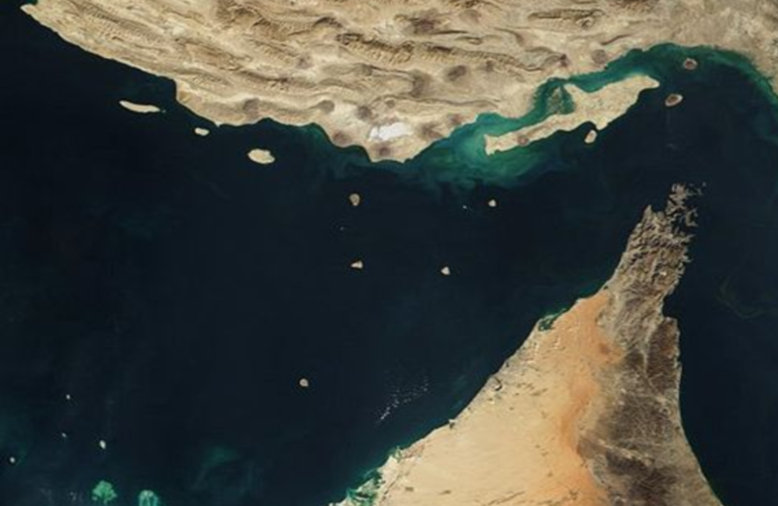
President Donald Trump has suspended his threatened bombing of Iran for two weeks, subject to the safe repassage of shipping through the Strait of Hormuz. One can only feel a sense of relief that last night’s worst horrors of utter destruction did not materialise, but wonder where matters will go from here.
The importance of this channel cannot be underestimated, since it is the conduit for 20% each of the world’s traded oil and gas. It is also the gateway for one third of the world’s agricultural fertilizers, 30% of its helium (used to cool the magnets of MRI scanners and in data centres and for electronics manufacturing) and 50% of global sulphur, which is converted to sulphuric acid, essential for the extraction of copper, cobalt and phosphate rock – the latter, again, for fertilizers.
Aluminium, petrochemicals, plastics and pharmaceuticals also pass through the strait, and for Gulf countries, it is a critical portal for imported food, upon which there is a high dependency.
The name derives from Hormoz, which is a Middle Persian expression of Ahura Mazda – the Zoroastrian deity of wisdom, light, and cosmic order. However, in this terrestrial and mortal realm, order is profoundly under threat of fracture.
Trump has given credit for this abeyance of military onslaught to Pakistan, who have steadfastly offered their hand to broker peace in the region. Pakistan is also a key member of a new four-nation alliance, along with Saudi Arabia, Egypt and Turkey, and a nuclear power.
Even if the strait were to remain open, a full flow of energy and materials will take considerable time to recover, along with the knock-on effects from damage to refineries and pipelines. A further issue is the massive insurance costs for ships passing through the region. Should a lengthy interruption ensue, the global consequences are likely to be catastrophic. It is noteworthy that some analysts do not predict a “mass exodus” of ships through the strait, which will still require permission from the Iranians to make the transit.
Against this backdrop, and a chilling prospect that “A whole civilization will die”, I was profoundly moved by the Easter messages from the Pope and the Archbishop of Canterbury, in each case their first, both calling for peace in the Middle East. In his address to thousands in St. Peter’s Square in Rome, Pope Leo told them:
“Let those who have the power to unleash wars choose peace,” while, in Canterbury Cathedral, Dame Sarah Mullally pressed for an “end [to] violence and destruction”.
At the time of the National Emergency Briefing, it is clear that the world must focus on cooperation and harmony if we are to deal with the climate and nature crisis, rather than fighting to the bitter end for what is left of Earth’s resources.


Comments
We changed commenting systems on September 10, 2026 as part of a site-wide functionality and security upgrade. Your past comments have not disappeared, and you can still log in with your old Disqus account credentials if you wish. Contact us with any questions.
The Strait was never re-opened and had almost zero chance of re-opening with such discordance in demands from the US and Iran. If the US has any intelligent negotiators then they are not being listened to. The fact that the moronic and delusional machinations of Trump has painted the US into a corner gives very little leeway for establishing agreement. It's literally anyone's guess how this will play out.
I was feeling modestly optimistic when I put this together last week, but now hope the region won't become a tinderbox for the worst outcome. What is not outdated, however, is my call that we find cooperation and harmony to deal with the climate and nature crisis, and not fight to the bitter end for the last of the Earth's resources.
This story is already outdated–Trump just closed the Strait of Hormuz.
Yes, Trump, not Iran, is closing the Strait with a U.S. naval blockade.
Don't ask me why, he's insane and suffering from dementia.
Other analysts say that the break in the fighting is due to the exhaustion of US artillary, which they launched at an unsustainable rate. They knew it was unsustainable in the first place, which is why they so arrogantly assured the public that this war would not last long. What the morons in the Pentagon did not anticipate was how well prepared Iran was. While Iran's largest war vessels may have been sunk, they have vast amounts of cheap munitions in underground granite bunkers, and conduct agile defense with cheap, easily replenished drones that US leviathan naval vessels are too big and slow to evade, and hyper-pricey US missile interception devices cannot keep up with. Meanwhile, the US blockade is essentially waging economic war on the entire world. A form of WWIII, just waiting for some country or another to retaliate, and escalate it into a hot WWIII.
Another point from other analyses is that attacking Iran is really a proxy for attacking China. As long as China restricts exports of critical minerals, especially rare earths but also others that they have cornered the market on, the US holds China's source of the one element they cannot replace hostage – – – heavy sour oil. The grade of oil from the Gulf region is the main source of middle distillates – diesel and jet fuel – that the global economy runs on, and without which, China's oil refineries, and its entire heavy industrial base comes to a standstill.
50,000 US troops freshly deposited in the region is a pretty good indication that nothing's going to be resolved next week. But even if the US called the whole thing off, and told the troops to turn around and go home, it will take 18-24 months for any of the Gulf states to resume "full" production, and they will never achieve 2025 levels of production because of the facilities that have been permanently destroyed or damaged, both by bombs and fires, and also by "shut-ins", which sometimes result in loss of pressure, mixture of chemically treated water with oil pores, and other geophysical damage.