

Lital Khaikin is a freelance journalist writing on dimensions of conflict including extractivism, environmental and human rights issues relating to conflict-affected regions, and post-conflict transition.
'SELECT SQL_CALC_FOUND_ROWS wp_posts.ID
FROM wp_posts INNER JOIN wp_postmeta ON ( wp_posts.ID = wp_postmeta.post_id )
WHERE 1=1 AND (
wp_posts.ID NOT IN (
SELECT object_id
FROM wp_term_relationships
WHERE term_taxonomy_id IN (47485,47486)
)
) AND (
(
( wp_postmeta.meta_key = \'the_author\' AND wp_postmeta.meta_value = \'3513884\' )
OR
( wp_postmeta.meta_key = \'secondary_author\' AND wp_postmeta.meta_value LIKE \'{9edf1393b564646d8ea83247c74c7f2f2a42862e65d266c095c77b0a43c92d6d}\\"3513884\\"{9edf1393b564646d8ea83247c74c7f2f2a42862e65d266c095c77b0a43c92d6d}\' )
)
) AND wp_posts.post_type = \'post\' AND ((wp_posts.post_status = \'publish\'))
GROUP BY wp_posts.ID
ORDER BY wp_posts.post_date DESC
LIMIT 0, 6'
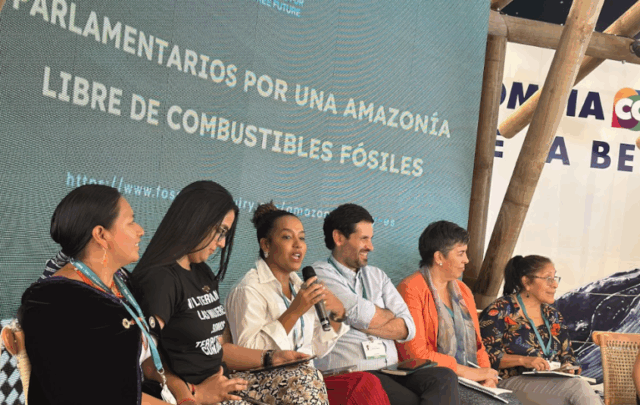
Inside the Indigenous ‘land back’ movement in Colombia
Sharing a border with Ecuador and Peru, the southern Colombian department of Putumayo takes its name from the Quechua term for “gushing river.” For some, its landscapes are a sacred doorway to the Amazon rainforest, a world unfathomably greater than the human. For others, however, this land looks more like oilfields and military bases, optimized waterflood assets and strategic trafficking corridors.
June 17, 2025

