In this Frankly, Nate shares insights on his personal/organizational priorities as a lead up to outlining 7 global interventions that he sees as being most impactful in preparing for a resource constrained future. As global stability deteriorates and the various macro-crises converge, how we invest our time and resources now can have a big impact for the various scenarios coming our way. Can we as individuals and communities place health and wellness at the forefront of our responses – which would in turn leverage many other higher impact initiatives? What would healthy humans surrounded by community and a shared purpose, informed by the ecological systems synthesis be able to accomplish?
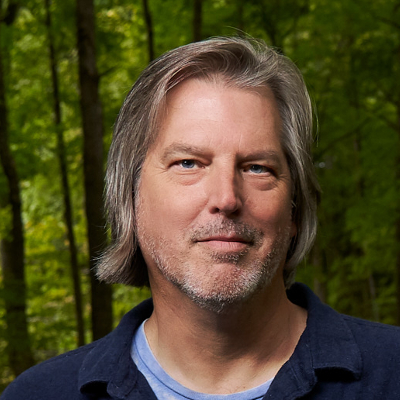
Nate Hagens is the Director of The Institute for the Study of Energy & Our Future (ISEOF) an organization focused on educating and preparing society for the coming cultural transition. Allied with leading ecologists, energy experts, politicians and systems thinkers ISEOF assembles road-maps and off-ramps for how human societies can adapt to lower throughput lifestyles.
Nate holds a Masters Degree in Finance with Honors from the University of Chicago and a Ph.D. in Natural Resources from the University of Vermont. He teaches an Honors course, Reality 101, at the University of Minnesota.
Related Articles
'SELECT SQL_CALC_FOUND_ROWS wp_posts.ID
FROM wp_posts LEFT JOIN wp_term_relationships ON (wp_posts.ID = wp_term_relationships.object_id)
WHERE 1=1 AND wp_posts.ID NOT IN (3500097) AND (
wp_term_relationships.term_taxonomy_id IN (3,5,9001)
) AND wp_posts.post_type = \'post\' AND ((wp_posts.post_status = \'publish\'))
GROUP BY wp_posts.ID
ORDER BY wp_posts.post_date DESC
LIMIT 0, 3'
There’s a crucial difference between places where people thrive and a thriving community. That distinction is the critical ingredient that enables some communities to flourish while others do not.
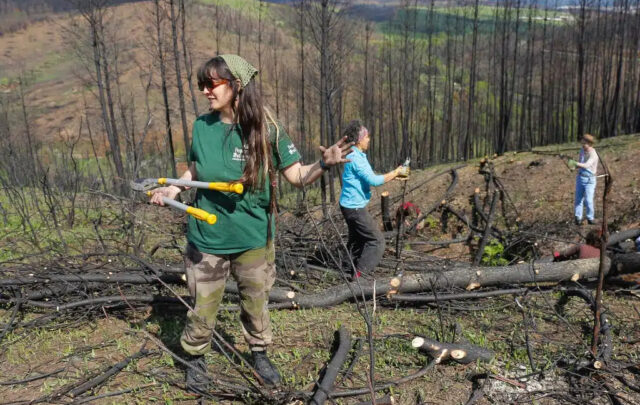
Rewetting and restoring wetlands, building small dams, and restoring streams create landscape-level breaks that disrupt fire spread by retaining water in the land instead of letting it run off. EcoAtivo is putting this approach into practice.
The climate movement needs the kind of leverage that comes from shutting down the economy — and it can only get there through deep organizing with workers.
September 24, 2026
Comments
We changed commenting systems on September 10, 2026 as part of a site-wide functionality and security upgrade. Your past comments have not disappeared, and you can still log in with your old Disqus account credentials if you wish. Contact us with any questions.







Comments
We changed commenting systems on September 10, 2026 as part of a site-wide functionality and security upgrade. Your past comments have not disappeared, and you can still log in with your old Disqus account credentials if you wish. Contact us with any questions.