

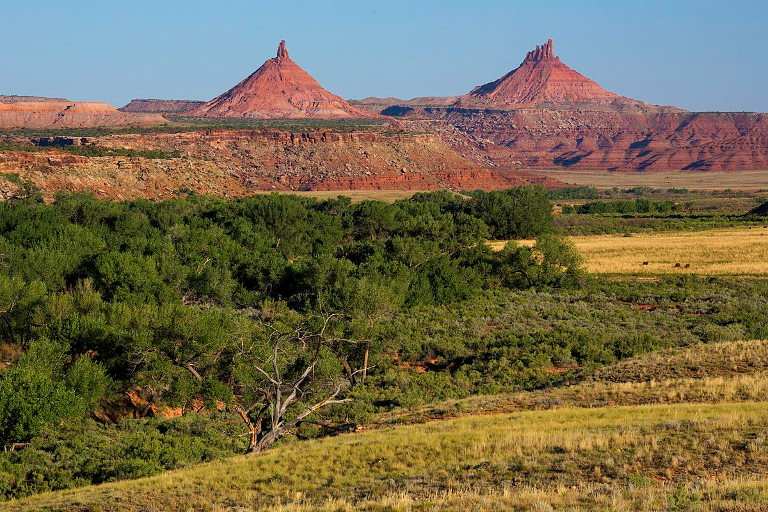
Regina is council-woman of the Ute Mountain Ute Tribe. She and host Alan Wartes spoke about her work with the Bears Ears Inter-Tribal Coalition fighting for the Bears Ears National Monument in Utah — and why it means so much for her tribe and for her personally.
Related Articles
We examined who actually supported repealing the roadless rule. The results tell a remarkable story
We dug through hundreds of organizational filings to find out who wanted one of America’s most important forest protections eliminated.
October 21, 2026

The foxes that spawned an urban rewilding movement
Montreal’s Darlington Ecological Corridor began as a tool to help urban foxes survive. Now, it’s become so much more.
October 21, 2026

COP17: Will we see a global reckoning for nature conservation?
This year’s COP summit focuses on protecting, restoring, and sustainably managing nature as the world falls short of most 2030 targets under the Kunming–Montreal Global Biodiversity Framework.
October 20, 2026


Comments
We changed commenting systems on September 10, 2026 as part of a site-wide functionality and security upgrade. Your past comments have not disappeared, and you can still log in with your old Disqus account credentials if you wish. Contact us with any questions.