


Click on the headline (link) for the full text.
Many more articles are available through the Energy Bulletin homepage
Japan sees a chance to promote its energy-frugal ways
Martin Fackler, New York Times
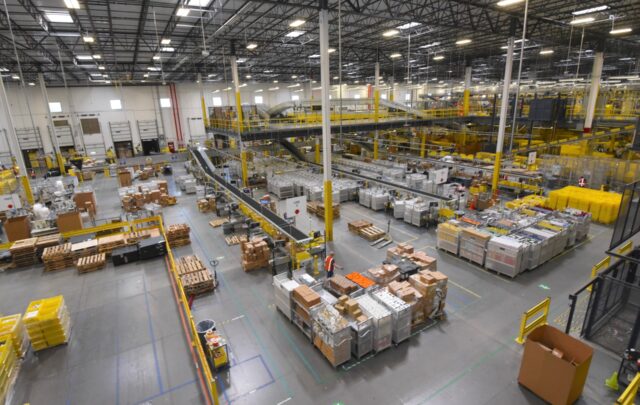
KUMAGAYA, Japan – With its towering furnaces and clanging conveyer belts carrying crushed rock, Taiheiyo Cement’s factory looks like an Industrial Revolution relic. But it is actually a model of modern energy efficiency, harnessing its waste heat to generate much of its own electricity.
Engineers from China and elsewhere in Asia come to study its design, which has allowed the company to slash the amount of power it buys from the grid.
The plant is just one example of Japan’s single-minded dedication to reducing energy use, a commitment that dates back to the oil shocks of the 1970s that shook this resource-poor nation.
Now, with oil prices hitting dizzying levels and the world struggling with global warming, the country is hoping to use its conservation record to take a rare leadership role on a pressing global issue.
(4 July 2008)
Various measures to tackle Korea’s soaring energy costs
Limb Jae-un, JoongAng Daily
The government released a number of measures to cope with rising energy costs yesterday that will only affect those working in the public sector – at least for now.
Cars owned by government agencies will only be driven every other day starting July 15, and public sector employees will only be allowed to park their cars at work every other day, depending in both cases on whether the license plate numbers end in an even or odd number.
The plans are mandatory for the public sector but they are recommendations for the private sector.
However, if the oil price hits $170, some of the recommendations will become compulsory.
… Among other measures, the optimal temperature for air conditioning or heating in public offices will be adjusted by 1 degree Celsius. Landscape lighting for monuments, bridges and fountains will also not be used, and elevators at public offices will only serve the fifth floor and higher, stopping at every other floor.
(7 July 2008)
South Korea sets fuel-saving measures
BBC Online
Thousands of public sector vehicles will only be allowed on the road on alternate days and government buildings air conditioning will be restricted.
Prime Minister Han Seung-soo said that if oil prices continued to rise, more extreme measures would be taken.
Correspondents say the move is largely symbolic as it covers only a limited number of vehicles and buildings.
South Korea has to import all its crude oil supplies and expects to spend $111.2bn (£56bn) on oil this year, up from $60.3bn (£30.4bn) last year.
Mr Han told a press conference: “Even oil-producing countries are tightening their belts to save energy in the era of the ultra high oil prices.”
“To take concrete measures to save energy is not a matter of choice but a matter of survival.”
(7 July 2008)
Contributor Dr. Larry Hughes writes:
“To take concrete measures to save energy is not a matter of choice but a matter of survival” — a stark admission that few, if any, politicians in the west would make.
Oil price shock means China is at risk of blowing up
Ambrose Evans-Pritchard, UK Telegraph
The great oil shock of 2008 is bad enough for us. It poses a mortal threat to the whole economic strategy of emerging Asia.
The manufacturing revolution of China and her satellites has been built on cheap transport over the past decade. At a stroke, the trade model looks obsolete.
No surprise that Shanghai’s bourse is down 56pc since October, one of the world’s most spectacular bear markets in half a century.
… “The monumental energy price increases will be a ‘game-changer’ for Asia,” said Stephen Jen, currency chief at Morgan Stanley. The region’s trade model is about to be “stress-tested”.
Energy subsidies have disguised the damage.
(7 July 2008)



Comments
We changed commenting systems on September 10, 2026 as part of a site-wide functionality and security upgrade. Your past comments have not disappeared, and you can still log in with your old Disqus account credentials if you wish. Contact us with any questions.