Click on the headline (link) for the full text.
Many more articles are available through the Energy Bulletin homepage
Poor? Pay Up.
DeNeen L. Brown, Washington Post
Having Little Money Often Means No Car, No Washing Machine, No Checking Account And No Break From Fees and High Prices
—
You have to be rich to be poor.
That’s what some people who have never lived below the poverty line don’t understand.
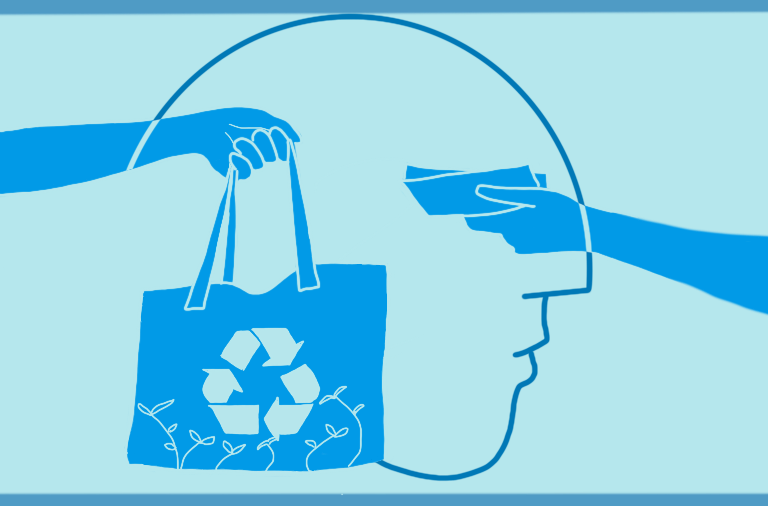
Put it another way: The poorer you are, the more things cost. More in money, time, hassle, exhaustion, menace. This is a fact of life that reality television and magazines don’t often explain.
So we’ll explain it here. Consider this a primer on the economics of poverty.
“The poor pay more for a gallon of milk; they pay more on a capital basis for inferior housing,” says Rep. Earl Blumenauer (D-Ore.). “The poor and 100 million who are struggling for the middle class actually end up paying more for transportation, for housing, for health care, for mortgages. They get steered to subprime lending. . . . The poor pay more for things middle-class America takes for granted.”
Poverty 101: We’ll start with the basics.
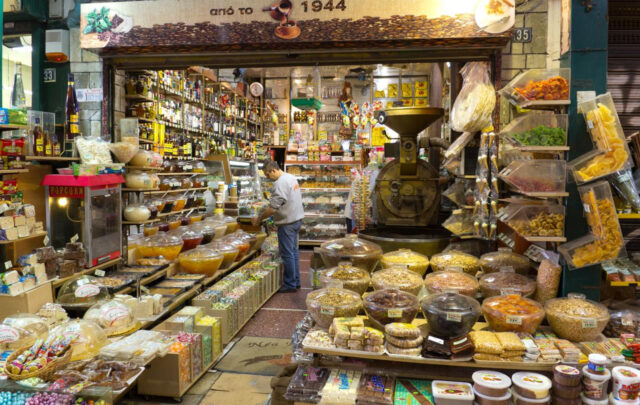
Like food: You don’t have a car to get to a supermarket, much less to Costco or Trader Joe’s, where the middle class goes to save money. You don’t have three hours to take the bus. So you buy groceries at the corner store, where a gallon of milk costs an extra dollar.
(18 May 2009)
In-depth article.
There’s an important distinction, which DeNeen Brown doesn’t mention, between traditional poverty and the modern variety. In traditional poverty, one existed within a community with others at the same level, so one had companions and a support system. Tradition provided ways to live well without much money — for example, cooking healthy meals using cheap staples. In contrast, modern poverty is characterized by lack of community and traditions. Junk food instead of collard greens. Watching the crap on TV rather than doing things with your buds. As a result, the new poor are hyper-exploited as this Washington Post article makes clear.
What we’re trying to do with relocalization and Transition is to re-discover those traditions that enabled people to live well with few resources. -BA
Ask Jeff Rubin
Jeff Rubin, Globe and Mail
Jeff Rubin, former chief economist at CIBC World Markets Inc., took your questions at Wednesday at 12:15 p.m.
Mr. Rubin built his reputation on a number of successful predictions, including one in 2000 that oil prices would hit $50 (U.S.) a barrel within five years and correctly calling the residential real estate market bust in the early 1990s. He was named Canada’s top economist a number of times.
Mr. Rubin recently forecast that the price of oil will reach $225 a barrel by 2012, and his book, called Why Your World Is About to Get a Whole Lot Smaller, is about how oil scarcity will lead to the end of globalization.
“It’s a book about the way the world is about to change. We’ve all got our eyes right now on the global financial meltdown, but I believe that oil scarcity will change the global economy even more profoundly and, in the process, change all of our lives – from where we work to where we live to what we eat,” Mr. Rubin says.
… Jeff Rubin: You can point to a multitude of special factors behind triple-digit oil prices but the simple reality is that world oil demand is growing rapidly while supply has been stagnant. That equation is only going to get worse over time, leading to even tighter oil markets.
Will $225 oil cause another and even deeper recession than the one we are currently in? Possibly yes, but not necessarily so. We can’t stop oil from getting to that price but we can make sure than when that happens, it doesn’t have the same devastating impact on the economy as it has in the past. We have to reduce the amount of oil or energy to produce a dollar of GDP. And the surest way of doing that is replacing today’s global economy with local economies.
(20 May 2009)
Suggested by EB contributor Larry Hughes.
David Rosenberg: ‘I think people are still in denial’
Brian Milner, Globe and Mail
Merrill Lynch’s chief North American economist, Canadian David Rosenberg, had an up-close look at the spectacular collapse of the credit markets. Brian Milner asks him for his view on when this economic malaise may come to an end
As Merrill Lynch’s chief North American economist, Canadian David Rosenberg had a front-row seat for the spectacular collapse of the U.S. housing market, the meltdown of the credit markets, the evaporation of trillions of dollars of household worth and the destruction of several of Wall Street’s most storied firms. If the people running those shops, including his own, had paid closer attention to his early dark warnings, they might still be occupying their lavishly furnished corner offices today.
Now, Mr. Rosenberg has taken his formidable analytical skills back to Bay Street, as chief economist and strategist with Gluskin Sheff. He remains thoroughly bearish on American prospects, but colours the outlook for the Canadian economy and markets in much brighter hues.
(20 May 2009)
Suggested by EB contributor Larry Hughes.
May 22 – updated link URL.