Spend an afternoon reading peak oil doomer sites on the Internet and you may alternate between the desire to reach for a kitchen knife and end it all and the inclination to dismiss the information on the sites as complete bunk. Hence the often voiced criticism of this approach to the peak oil issue: It creates a mental paralysis in some readers who conclude that nothing can be done and causes many others to reject peak oil as the invention of unbalanced survivalists living on the fringe of society.
There is certainly something to this criticism even if the caricature of the doomers is overblown. Most of the doomers I know live in city neighborhoods, hold regular jobs and involve themselves in their communities like so many of us. In this piece I’m going to take the contrarian side and suggest that so-called “doomer porn,” that is, extreme Mad Max-style scenarios concerning the human destiny, serves important purposes.
If peak oil preparation is about anything, it is about scenario planning. Since no one knows the future, we can only imagine possible outcomes. Planning for a single possible outcome is not planning at all. Experience tells us that almost nothing ever goes according to plan. This is even more true when our plan is based on the trajectory of all of human civilization. So the wise course is to imagine many scenarios that seem to be within the realm of possibility and maybe a few that don’t. In doing so we can evaluate the consequences of those possible outcomes and judge whether their severity warrants some preparation.
Let me explain. If I believe my actions could at worst result in a hangnail for me, I might dismiss this concern as something not worth worrying about. But if I risk losing an arm, I’m going to be far more attentive. I may decide that what I’m about to do isn’t worth the risk or that I need to take special precautions if I choose to proceed.
The key element in scenario planning in my view is not the probability of a particular scenario–something which is impossible to calculate and can only be guessed at. The key element is the severity of the consequences of any one scenario. If the consequences are favorable or at least the harm is negligible, then we need to make few preparations. But if we judge that a possible scenario could result in catastrophic consequences–say, a complete loss of our livelihood or death for ourselves or our family members–and even if the probability seems small, it is well worth taking some precautions. And, in fact, most people already do take precautious for unlikely but high-impact events such as house fires. They buy fire extinguishers, plan escape routes and purchase homeowners insurance.
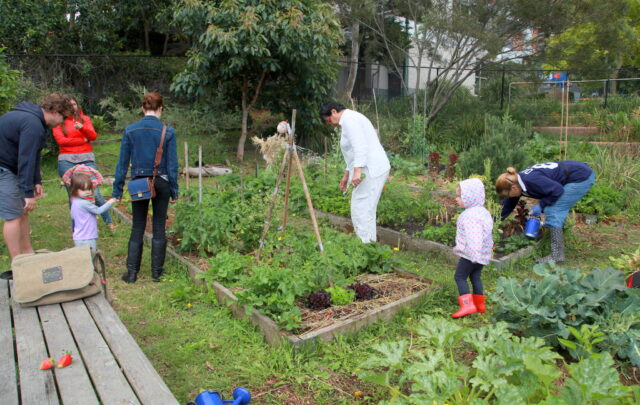
The next question is whether those precautions we might take to shield ourselves from extreme consequences might be useful in less extreme circumstances. Quite often this is the case. With our doomer colleagues we find that they advise such things as forming alliances with neighbors and friends; growing food, fiber and possibly fuel; learning food preservation techniques; becoming less car-dependent; and generating energy on premises with a wind generator, solar panels and possibly wood. All of these steps can be useful and even rewarding no matter what happens.
Another thing that becomes apparent as one peruses the peak oil preparation sites is that there is no clear line between a doomer and a sensible person thinking about preparations for a post-peak oil world. And there are, of course, plenty of sites about organic gardening and farming, local production of food and biofuels, solar and wind power, and myriad other sustainability related topics that make no mention of peak oil or an impending civilization-wide collapse.
What so-called doomers do is provide an imagination for the worst. If we are to consider the entire range of possible outcomes in a post-peak oil world, then we must consider the worst that could happen. That doesn’t mean we need to assign a very high probability to such a scenario. But, in fact, one aspect of the most extreme peak oil scenarios is playing out right before our eyes: worldwide economic collapse. Whether one can attribute the collapse to the highest oil prices ever recorded last year or whether it is primarily a financial phenomenon, one thing that cannot be denied is that it is extremely severe. So already the doomers’ vision is coming in handy though the most worrisome aspects of their various predictions–for example, a breakdown of the public health and food systems leading to plagues and widespread starvation–may be a long ways into the future or never materialize.
A friend of mine suggested to me that one simply cannot prepare for the swift and total collapse of civilization; one can only improvise in such circumstances. But it is still possible to prepare for something short of that, and in this quest the doomers remind us of just how far we might have to go to meet the challenges of a post-peak oil world.
Even a stopped clock is right twice a day. Let the doomers have their say. They have plenty of good ideas. They think we should prepare for the worst, an attitude any boy scout would recognize. Perhaps the doomers might fare better in the eyes of the public if they also added more often that we should hope and work for the best possible outcome.
Having said all this, I recognize that those who hear the peak oil message from me for the very first time and listen to the possible implications may regard me as a doomer. And perhaps I am for I believe that the turbocharged, energy-intensive, consumer-oriented lifestyle of contemporary society is doomed. Whether we can replace it with something better and sustainable is the basis for a vigorous debate to which doomer porn has added a necessary and useful counterweight to the techno-optimism of the age.