


Click on the headline (link) for the full text.
Many more articles are available through the Energy Bulletin homepage
The United States, China, Peak Oil, and the Demise of Neoliberalism
An Age of Transition
Minqi Li, Monthly Review
Until recently, the global capitalist economy has enjoyed a period of comparative tranquility and grown at a relatively rapid pace since the global economic crisis of 2001-02.
During this period of global economic expansion there have been several important economic and political developments.
First, the United States-the declining hegemonic power but still the leading driving force of the global capitalist economy-has been characterized by growing internal and external financial imbalances. The U.S. economy has experienced a period of debt-financed, consumption-led “expansion” with stagnant wages and employment, and has been running large and rising current account deficits (the current account deficit is a broad measure of the trade deficit).
Second, China has become a major player in the global capitalist economy and has been playing an increasingly important role in sustaining global economic growth.
Third, global capitalist accumulation is imposing growing pressure on the world’s natural resources and environment. There is increasingly convincing evidence that the global oil production will reach its peak and start to decline in a few years.
Fourth, the U.S. imperialist adventure in the Middle East has suffered devastating setbacks and there has been growing resistance to neoliberalism and U.S. imperialism throughout the world.
As the U.S. housing bubble bursts and the dollar’s dominance over the global financial system becomes increasingly precarious, the U.S. economy is now going into recession and the global capitalist economy is entering into a new period of instability and stagnation. The coming years are likely to see a major realignment of the various global political and economic forces and will set the stage for a new upsurge of the global class struggle.
… Peak Oil and the Limits to Accumulation
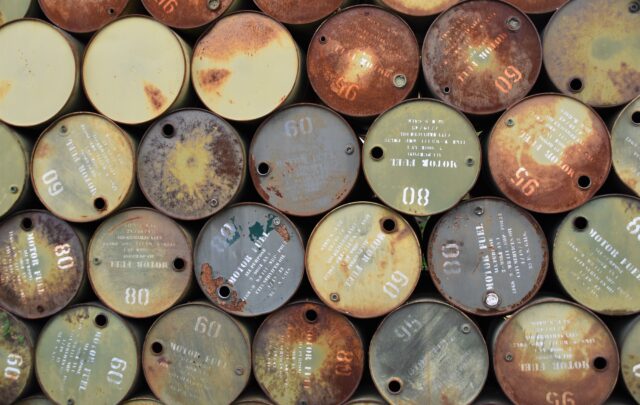
… The global capitalist economy depends on fossil fuels (oil, natural gas, and coal) for 80 percent of the world’s energy supply. Oil accounts for one-third of the total energy supply and 90 percent of the energy used in the transportation sector. Oil is also an essential input for the production of fertilizers, plastics, modern medicine, and other chemicals. [the German Energy Watch Group and Colin Campbell are quoted about an approaching peak.]
…If world oil production and the production of other fossil fuels reach their peak and start to decline in the coming years, then the global capitalist economy will face an unprecedented crisis that it will find difficult to overcome.
… in the coming years we are likely to witness a major realignment of global political and economic forces. There will be an upsurge in the global class struggle over the direction of the global social transformation. If we are in one of the normal cycles of the capitalist world-system, then toward the end of the current period of instability and crisis, we probably will observe a return to the dominance of Keynesian or state capitalist policies and institutions throughout the world.
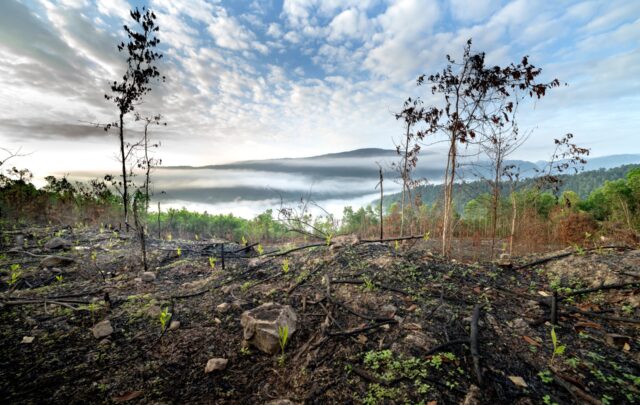
However, too much damage has been done. After centuries of global capitalist accumulation, the global environment is on the verge of collapse and there is no more ecological space for another major expansion of global capitalism.
Minqi Li teaches economics at the University of Utah in Salt Lake City.
(April 2008 issue)
The first prediction I saw online about a resurgence of socialism was in a paper by a British military think tank, which said it was possible if the condition of the middle classs were to deteriorate. -BA
What Power Looks Like: Meet the Superclass
David Rothkopf, Newsweek
They ride on Gulfstreams, set the global agenda, and manage the credit crunch in their spare time. They have more in common with each other than their countrymen.
—
… The people on the recent calls like those described by Geithner, plus a few thousand more like them, not only in business and finance, but also politics, the arts, the nonprofit world and other realms, are part of a new global elite that has emerged over the past several decades. I call it the “superclass.” They have vastly more power than any other group on the planet. Each of the members is set apart by his ability to regularly influence the lives of millions of people in multiple countries worldwide. Each actively exercises this power, and often amplifies it through the development of relationships with other superclass members. This new class of elites is both more permeable, and more transient, than elites of the past. The age of inherent lifelong power is largely behind us-to be a member of this superclass one has to hold on to power just long enough to make an impact, be it by leading a revolution or launching a revolutionary Web site.
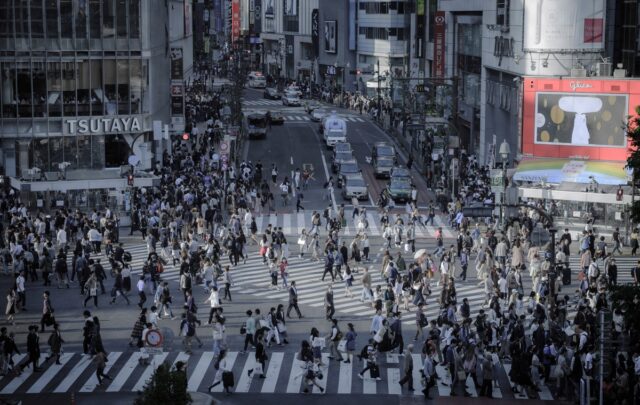
So how does one become a member? As ever, being rich certainly helps. Many superclass members are wealthy, wealthier in relative terms than any elite ever has been. The top 10 percent of all people, for example, now control 85 percent of all wealth on the planet. But wealth is only part of the equation. Power is the other currency of any true elite, and if we want to understand the superclass, we need to look at those who have influence that crosses borders-one of the factors that differentiates them from most of the elites of history, whose influence was predominantly national or even more local in nature.
… That such a group exists is indisputable. It includes the heads of the biggest financial institutions, the 14 families Blankfein joked about, and then some; the top 50 control almost $50 trillion in assets. The heads of the world’s biggest corporations are also members; the top 2,000 support perhaps 500 million people, generate almost $30 trillion in sales and have well over $100 trillion in assets. The list also includes top government officials with real cross-border influence: heads of state, of course, leading diplomats and military chiefs, but also central bankers like Geithner and Bernanke, and their counterparts like Chinese Central Bank Gov. Zhou Xiaochuan, reappointed this week, and the other top economic officials responsible for the world’s fastest-growing economy and its nearly $1.5 trillion in reserves.
… This concentration of wealth and economic influence has translated into a concentration of power, a trend helped by the fact that the power of national governments is on the wane in many parts of the world. The rise of transnational activities (both public and private), a broad move away from state intervention in national markets and the effective reduction in the state’s ability to use force due to the awesomely high price of modern warfare, have all contributed to the declining power of the individual nation-state. In turn, those whose organizations are built for global activity, like multinational companies or financial institutions (or terrorist networks or NGOs), have gained a relative advantage over individual governments and governmental organizations. Consider that the Gates Foundation gives about $1.5 billion annually to support global health initiatives-roughly the entire annual budget of the World Health Organization.
(14 April 2008)
The Way The World Works – 2008. Long article which serves as a welcome antidote to conspiracy theories. -BA


Comments
We changed commenting systems on September 10, 2026 as part of a site-wide functionality and security upgrade. Your past comments have not disappeared, and you can still log in with your old Disqus account credentials if you wish. Contact us with any questions.