


Addressing the Fossil Fuel Crisis
Statement Adopted by Green-Rainbow Party State Committee, 11/17/07
Two closely related crises of immense proportions are breaking upon the world. They will change the way we live. They will sweep away economic institutions that today enjoy unchallenged dominance. They will cause political upheavals and enormous social dislocations. The two crises can be called “climate change” and “peak oil” and together we can call them the “fossil fuel crisis”. Both stem from the way in which we have been using cheap and abundant fossil fuels to power our economy. Communities that prepare for the coming crises will emerge intact. Those which attempt to continue business-as-usual will find themselves facing enormous uncertainty and potential chaos in the difficult transition that lies ahead.
- Climate Change
These are key considerations regarding climate change:
- In 2007, atmospheric CO2 levels (~375 ppm) are significantly above pre-industrial levels (280 ppm) and this increase is the main driver behind global warming.
- These increases are primarily due to human activities, particularly burning of fossil fuels.
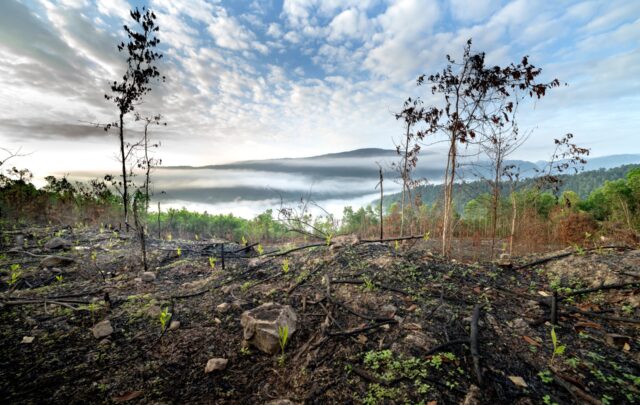
- The impacts of climate change are already severe, including catastrophic floods, drought, forest fires, heat waves (that took over 50,000 lives in Europe alone in 2003) , increased loss of fertile land to desert, loss of water supplies, disappearance of coral reefs.
- There is reason to believe that further CO2 increases (beyond approximately 450 ppm) could reach a point of no return and trigger changes in nature (non-linear feedback mechanisms) that will produce run-away climate change.
- Run-away climate change would lead to temperatures warmer than in a million years (the age of the dinosaurs), melting of the polar ice caps, a sea level rise, and devastating impacts to human populations.
- The time lag between increased CO2 emissions today and further warming tomorrow means that we must act now. Continued business as usual for even a short while —perhaps as short as a decade — will eliminate prospects for averting catastrophe
- Peak Oil
The second crisis we face is the “peak oil” phenomenon. Peak oil refers to the geophysical reality that the world has consumed approximately half of the world’s fossil fuels reserves, and that from here on the price of oil will rise dramatically as demand grows and supplies shrink. In addition, the supply of oil will be increasingly vulnerable to disruptions due to weather events, growing geopolitical instability, sudden declines in supply and other causes. Peak oil is troubling on several counts. The steady rise of oil prices will make the use of petroleum unaffordable for many current uses, and will produce increasingly severe economic and social dislocations. Military conflicts driven by attempts to control oil reserves will continue to proliferate. Rising oil prices are already driving up the cost of the most basic necessities of life such as food and heating oil. This poses an enormous challenge to economic justice in Massachusetts as the necessities of life become increasingly unaffordable for many.
Adapting to peak oil requires major changes in our built infrastructure and our economy. Effecting such changes could take decades, and given the documented declines in new oil discovery, we are clearly in a race against time.
- Decisive Action Must Begin Now
An immediate and forceful response is required to ensure the survival of a just and livable society. While long range planning is important, we cannot afford to adopt long-range plans for the year 2050 that put off the need for real near-term change. “First steps” should be accompanied by clear and enforceable commitments to taking the follow-on steps that offer real solutions. A measure of sincerity must be whether our plans require that the problem be solved and whether they require significant action, starting now.
- The Need to Break the Stranglehold of Lobbyists & Campaign Contributions on Policy
In calling for action, we recognize the political dynamics governing the development of public policy. Corporate powers that profit from the fossil fuel economy wield enormous influence in Congress and in state legislatures. Their lobbyists write legislation and their wealth funds the political careers of many lawmakers. As the state that tops all 50 states in lobbyist expenditures per capita, Massachusetts is as much a part of this culture of influence as any state government. This insidious collaboration of government and corporate interests has proven adept at creating “green” initiatives that give the appearance of action but which, in reality, provide cover for business-as-usual, and thus worsen the ultimate reckoning.
Because adequate leadership and commitment has not come from our elected bodies, we, the people, whose lives are on the line, must speak up with a clear and independent voice, demanding action. We must also demand that our elected officials distance themselves from the legalized bribery of campaign financing. Unless we free our policy-setting process from this subversion of the public interest, we will find that energy policies continue to maximize the profits of existing enterprises and protect market shares rather than ensure our survival.
- The Need for Community-Based Action, with State Support
Given the slow pace of progress at the state and national levels, it is vital that individuals and local communities move forward to respond to the crisis. Local leadership can set an example for state and national leaders, and can make a significant contribution toward a solution. We must also ask that state resources be made available to promote such community-based adjustments. Sustainable development at the community level is essential to ensure the vitality of our communities in a postcarbon future. Of particular importance are enterprises that move us toward local self- sufficiency for energy and food production. Funding to support local job creation in green technologies, renewable energy, and local agriculture could provide a jobs bonanza for the Commonwealth, even as it weans our economy from its fossil fuel addiction.



Comments
We changed commenting systems on September 10, 2026 as part of a site-wide functionality and security upgrade. Your past comments have not disappeared, and you can still log in with your old Disqus account credentials if you wish. Contact us with any questions.