


Click on the headline (link) for the full text.
Many more articles are available through the Energy Bulletin homepage
Ministers speak out on Chile’s energy crisis
Monica Evans, Valpariaso Times (Chile)
Chile’s impending energy crisis, sharpened by diplomatic tensions with Argentina and one of the coldest winters on record, was the theme of a seminar held last week in ValparaÃso’s Congress building. New Energy Minister Marcelo Tokman Ramos, Environment Minister Ana Lyn Uriarte and various members of Congress spoke at the event, which was titled “Energy Policy in Chile: A Challenge.”
In a country that currently imports 74 percent of its energy, the prospect that one of its principal suppliers – Argentina – may stop providing gas is a worrying one. And, “we have to say it like it is. Argentine gas is going to stop coming some day. We have to forget about it,” said Congressman Francisco Encina at the seminar’s opening.
In the face of this reality, many of the speakers urged, Chile must figure out a way to supply its own energy, though not at the cost of its environment.
Minister Uriarte spoke of the importance of diversifying Chile’s energy supply, and of making a gradual transition to “clean” and/or renewable energy sources such as wind, hydrothermal power and bio-gas.
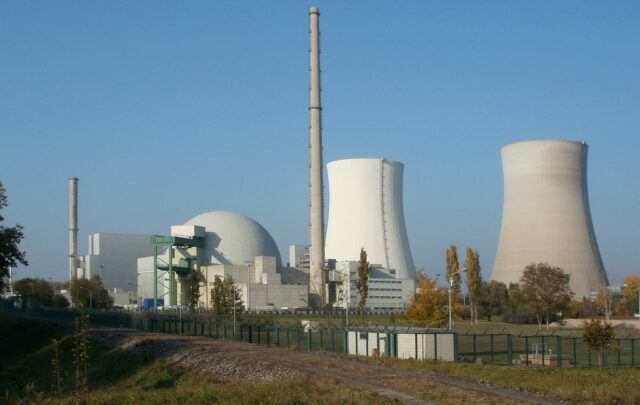
Tokman addressed what he viewed as the “necessity” of investigating the possibility of using nuclear energy. “There is a lot of misinformation and prejudice about the issue,” he said.
Speakers also examined the other side of the coin – reducing energy demand. As Minister Tokman revealed, economic growth in Chile in the last 30 years has been mirrored “point for point” by growth in energy consumption.
“But it doesn’t have to be like that,” he stressed. “In developed countries, that doesn’t happen… energy-efficiency programs have been around for a long time in those countries.”
(16 July 2007)
China and Turkmenistan sign energy deals
Le Tian, China Daily
China and Turkmenistan yesterday signed a series of cooperation agreements on trade, technology, education and energy, including two on sharing natural gas products and gas purchase.
According to a joint statement signed by President Hu Jintao and his Turkmenistan counterpart Gurbanguly Berdymukhamedov in Beijing, the two countries agreed to expedite talks on energy partnership to complete the proposed China-Turkmen gas pipeline at the earliest.
China’s largest oil producer, China National Petroleum Corp (CNPC), and a Turkmen government agency signed the product-sharing contract, and the gas purchase deal was inked between CNPC and a Turkmen natural gas firm. ..
When Niyazov visited China in April last year, the two countries signed an agreement, according to which China would buy 30 billion cubic meters of natural gas a year from the resource-rich Central Asian country for 30 years. The gas is to be delivered through a pipeline to be built by 2009. ..
“The biggest problem is in building of the pipeline, which will have to pass through a third country, most probably Kazakhstan and Uzbekistan. So the energy cooperation has to involve other Central Asian countries, too” Sun Zhuangzhi, a Central Asian expert with the Chinese Academy of Social Sciences, said. Turkmenistan has the largest gas deposits among the former Soviet republics after Russia.
(18 Jul 2007)
Venezuela: Idea of ‘energy security’ in U.S. is fantasy
Bernardo Alvarez. Houston Chronicle
Energy security is one of the major policy issues facing the United States. The debate in this country, however, has been framed solely in terms of whether the United States has adequate supplies of reliable and affordable energy to meet its substantial needs.
While certainly a component of energy security in its narrowest sense, it really misstates the issue, making it difficult, if not impossible, for the achievement of real energy security. Unfortunately, the United States is missing the opportunity of gaining a more integrated, robust and durable energy security not only for itself, but also the entire hemisphere, and, more generally, the world as a whole. ..
The United States can continue to look only inward in a self-defeating effort to achieve a chimerical “energy security.” Or, it can rethink its foreign policy with respect to Latin America. It is a fool’s errand for the United States to try to gain “energy independence” for itself. Simply put, it is impossible. Energy independence within the hemisphere can be achieved, however.
Instead of heaping condemnation on us for our vision of what constitutes true energy security for all countries, including the United States, and the means to achieve it, the United States should heed our call to engage in dialogue with us on the basis of mutual respect between sovereign nations.
Venezuela’s right to manage its nonrenewable energy resources in ways that provide maximum benefit to its people and the people of the hemisphere, in accordance with the will and dignity of our citizenry, is fundamental. We would welcome the United States’ acknowledgement of this right, and we invite it to work with us in a spirit of true comity in this vital endeavor.
Alvarez is ambassador of the Bolivarian Republic of Venezuela in the United States.
(16 Jul 2007)



Comments
We changed commenting systems on September 10, 2026 as part of a site-wide functionality and security upgrade. Your past comments have not disappeared, and you can still log in with your old Disqus account credentials if you wish. Contact us with any questions.