


Click on the headline (link) for the full text.
Many more articles are available through the Energy Bulletin homepage
CO2 output must cease altogether, studies warn
Research points to years of warming even with ambitious emission cuts
Juliet Eilperin, Washington Post
The task of cutting greenhouse gas emissions enough to avert a dangerous rise in global temperatures may be far more difficult than previous research suggested, say scientists who have just published studies indicating that it would require the world to cease carbon emissions altogether within a matter of decades.
Their findings, published in separate journals over the past few weeks, suggest that both industrialized and developing nations must wean themselves off fossil fuels by as early as mid-century in order to prevent warming that could change precipitation patterns and dry up sources of water worldwide.
Using advanced computer models to factor in deep-sea warming and other aspects of the carbon cycle that naturally creates and removes carbon dioxide (CO2), the scientists, from countries including the United States, Canada and Germany, are delivering a simple message: The world must bring carbon emissions down to near zero to keep temperatures from rising further.
(9 March 2008)
Letter from Stockholm: Sweden Goes Shopping
Alan AtKisson, WorldChanging
A two-page spread in one of the several free city dailies in this formerly Nordic, lately Mediterranean and snow-free city [Stockholm] provides a snapshot of life here today.
… “It’s nice to fly green,” says one headline. Apparently, Sweden is unique in the world for practicing a new pattern of landing that is essentially the same thing as taking your foot off the gas pedal and coasting into your driveway. Coming into Arlanda Airport, the Boeing 737s flown by SAS power down, and glide. They have done this 2,000 times so far, and discovered that (1) it saves them money on fuel, (2) it saves tons of CO2 (if all of SAS did this it would be like taking 20,000 petrol cars off the road), (3) it reduces noise, and (4) most fascinating of all, it improves the reliability of on-time landings. How this happens is not explained, but we like reliability here in Sweden, so this benefit is mentioned twice in the article. Sweden also has closer-than-average business relationships with China, which likes to look at Swedish models, perhaps because we practice something a bit like the Chinese model of socialist capitalism. China plans to build 50 new airports, and they’ve been studying this glide-landing technique.
Okay, it’s not going to save the world, but it is a nice little green innovation, and it started here.
The rest of the two-page spread is, however, not so encouraging when it comes to the vision of a climate neutral and sustainable 21st century society.
Stockholm is going through a spasm of new mall building.
(7 March 2008)
China’s Snow Storms Destroy Forests
Associated Press
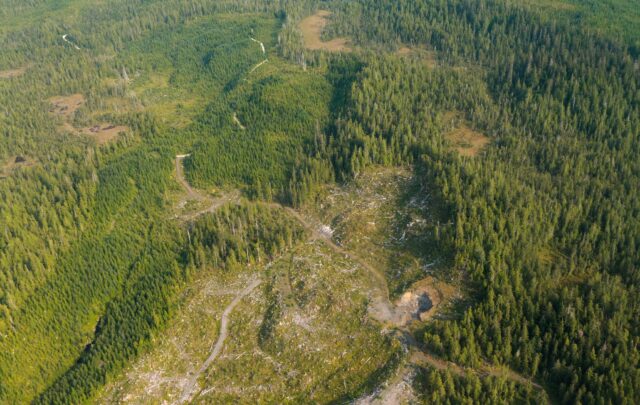
China’s unusually strong winter snow storms damaged 10 percent of the country’s forests, leading to huge economic losses and widespread environmental destruction, the forestry administration said Tuesday.
Economic losses for the forest industry reached $8 billion, Vice Minister of the State Forestry Administration Zhu Lieke told a news conference. The storms hit some of China’s best forest areas, and vital supplies for the timber industry, in southern China, he said.
“There’s no doubt this natural disaster has caused great losses to the forestry resources in the southern part of China, but nationwide China’s timber production capacity has not been fundamentally affected,” he said.
(18 February 2008)
An important story which hasn’t gotten much attention. Science just published a longer article, which unfortunately is behind their infamous paywall: Ecologists Report Huge Storm Losses in China’s Forests.
EU told to prepare for flood of climate change migrants
Ian Traynor, Guardian
Global warming threatens to severely destabilise the planet, rendering a fifth of its population homeless, top officials say
—
… Now, according to the EU’s two senior foreign policy officials, Europe needs to brace itself for a new wave of migration with a very different cause – global warming. The ravages already being inflicted on parts of the developing world by climate change are engendering a new type of refugee, the “environmental migrant”.
Within a decade “there will be millions of environmental migrants, with climate change as one of the major drivers of this phenomenon,” predict Javier Solana and Benita Ferrero-Waldner, the EU’s chief foreign policy coordinator and the European commissioner for external relations. “Europe must expect substantially increased migratory pressure.”
They point out that some countries already badly hit by global warming are demanding that the new phenomenon be recognised internationally as a valid reason for migration.
The immigration alert is but one of seven “threats” that the two officials focus on in pointing to the security implications and the dangers to European interests thrown up by climate change.
(10 March 2008)




Comments