Click on the headline (link) for the full text.
Many more articles are available through the Energy Bulletin homepage
Challenges, threats and opportunities for sustainable agriculture, Part II
Miguel Altieri, Ph.D., Speaking Truth to Power
Conclusions
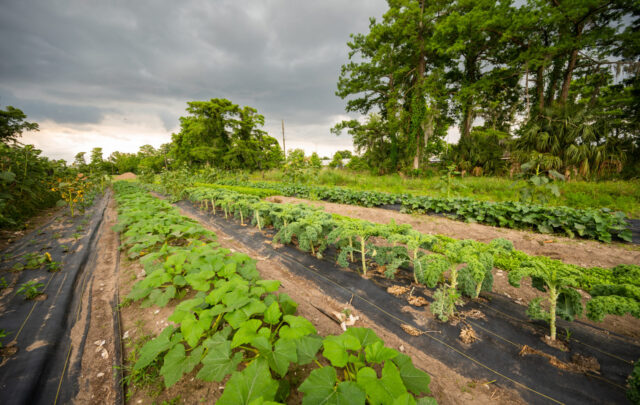
It is clear that technological or ecological intentions are not enough to disseminate agroecology. There are many factors that constrain the implementation of sustainable agriculture initiatives. Major changes must be made in policies, institutions, and research and development agendas to make sure that agroecological alternatives are adopted, made equitably and broadly accessible and multiplied so that their full benefit for sustainable food security can be realized. It must be recognized that a major constraint to the spread of agroecology has been that powerful economic and institutional interests have backed research and development for the conventional agroindustrial approach, while research and development for agroecology and sustainable approaches has been largely ignored or even ostracised.
Evidence showing that sustainable agricultural systems can be economically, environmentally and socially viable and contribute positively to local livelihoods is rapidly emerging. But without appropriate policy support, they are likely to remain localized in extent. Therefore, a major challenge for the future entails promoting institutional and policy changes to realize the potential of the alternative approaches….
(7 March 2007)
Part I is also online.
Food sector vulnerable to emergencies, says study
Ahmed ElAmin, Food & Drink (trade journal)
Being lean and mean in the food and drink manufacturing sector might pay off in terms of profits, but the practice has left the supply chain vulnerable to a crisis, according to a UK government report.
The government-commissioned report concludes that the drive for efficiency and the just-in-time philosophy used by the industry has progressively reduced stock levels throughout the supply chain — with the resulting damage to its resilience when an emergency occurs.
The study highlights the need for processors to have business continuity mangement (BCM) plans in place to deal with emergencies such as livestock diseases, bird flu, or fuel shortages, as well as site-specific events such as natural disasters, product contamination or terrorist attacks.
(6 March 2007)
The Man Who Farms Water
Brad Lancaster, The Ecologist (February 2007) via Bill Totten
An inspirational farmer proving just how much is possible for farmers in Africa, even in times of extreme drought
~~
During an extended trip through southern Africa in the summer of 1995, I had the privilege of meeting a true ecological visionary. His name is Mr Zephaniah Phiri Maseko, but to the Permaculture Trust of Botswana (who directed me to him), as well as to hundreds of people throughout the region, he is known more generally as ‘the man who farms water’.
As a longtime student of sustainability and rainwater harvesting, I’ve found an abundance of simple, inspiring, and highly effective strategies practised in areas having far fewer available resources than the United States.
(5 Mar 2007)
Great article -AF
And on This Farm She Found a Future
Nancy Brill, Newsweek
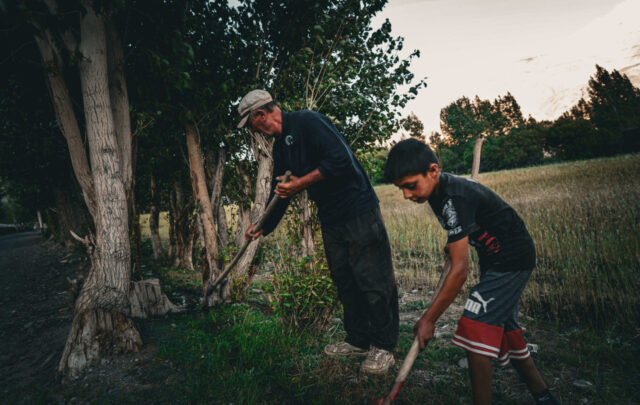
The farmer had a tanned face, weathered from working in the hot sun and dry air. He took in my clean appearance and small, unmuscular body. “So,” he said, “you like to get dirty?”
It was 1998. After working as a cashier for three summers at a local farm during high school, I was moving from behind the register to the seat of a tractor, which I would be maneuvering through the farm’s 100-acre vegetable fields. I would be working long hours in the heat of New Jersey’s humid summers. I knew I would get dirty-and I couldn’t wait.
(5 Mar 2007)