Click on the headline (link) for the full text.
Many more articles are available through the Energy Bulletin homepage
Scientists offered cash to dispute climate study
Ian Sample, Guardian
Scientists and economists have been offered $10,000 each by a lobby group funded by one of the world’s largest oil companies to undermine a major climate change report due to be published today.
Letters sent by the American Enterprise Institute (AEI), an ExxonMobil-funded thinktank with close links to the Bush administration, offered the payments for articles that emphasise the shortcomings of a report from the UN’s Intergovernmental Panel on Climate Change (IPCC).
(2 Feb 2007)
Even Before Its Release, World Climate Report Is Criticized as Too Optimistic
Cornelia Dean, NY Times
In its 2001 assessment, its third, the Intergovernmental Panel on Climate Change estimated that in the next hundred years sea level would rise globally by at least a few inches and perhaps as much as three feet, a catastrophe for low-lying coastal areas and island nations.
In Paris today the panel will issue its fourth assessment, and people familiar with its deliberations say it will moderate its gloom on sea level rise, lowering its worst-case estimate.
In theory that is good news, because rising seas bring erosion and flooding to coastal areas. But a lower estimate has not been uniformly cheered.
In letters to and conversations with panel members, and in scientific journals, several climate experts said the estimate was almost certainly wrong because the panel was leaving out a growing body of data on melting glaciers and inland ice sheets, which are major contributors to sea level rise.
Those experts say that unless the finding is modified, the panel – widely cited as an authoritative voice on climate change – risks condemning itself to irrelevance.
(2 Feb 2007)
Climate change report paints doomsday scenario for Sydney
Agency France Presse
Global warming will leave Sydney in permanent drought by 2070, with huge seas battering its famous beaches and raging bushfires threatening its outskirts, a new report says.
Wednesday’s report from the national government’s scientific agency predicts a grim future for Australia’s largest and best-known city, concluding that climate change is inevitable and the city should start immediate planning.
The CSIRO predicts the average Sydney temperature will rise 4.8 Celsius (40 degrees Fahrenheit), well above the average 3.0 predicted globally by the UN Intergovernmental Panel on Climate Change.
Rainfall is forecast to fall by 40 percent and the number of heat-related deaths in the city of four million is expected to soar almost 800 percent from the current 176 to 1,312 by 2050.
The report said a 20 centimetre (7.9 inch) rise in sea levels would result in storm surges of 22 metres on Sydney’s beaches, leaving them eroded and inundating sea-side homes.
The heat is expected to whip up 24 percent more wind storms and fuel almost double the number of severe bushfires in the state of New South Wales.
State Premier Morris Iemma, who commissioned the CSIRO report, said the national and state governments needed to act to ensure the city’s future.
“This might sound like a doomsday scenario but it’s one we must confront,” Iemma, from the Labor party, said.
“We don’t need to be waiting for the impact, it’s real and it’s here.” ..
(31 Jan 2007)
CNN saw a different story: Report: Sydney heat deaths to soar.
Global warming scenario for SF Bay
Jane Kay, SF Chronicle
If the oceans rise as expected over the next century and nothing is done about it, bay water would slowly flood San Francisco and Oakland airports, cover highways and inundate Treasure Island, the Giants ballpark and parts of Alameda and Silicon Valley.
Even now, water managers are fighting global warming. The bay at Fort Point has risen 8 inches over the past century and could rise another 3 feet by the end of this century, according to the last assessment of international climate scientists.
Already, at some high tides, Tom Franza, the San Francisco Public Utilitities Commission’s assistant general manager, watches as salt water flows over cement structures and into the city’s sewage treatment system. The salt can kill the microbes that eat up biological waste.
And Walter Bishop, the Contra Costa Water District’s general manager, is struggling to build reservoirs and is considering desalination to prepare for rising bay water that could flood the Sacramento-San Joaquin River Delta and ruin his water supply. More than two-thirds of Californians also rely on the delta for their drinking water.
(1 Feb 2007)
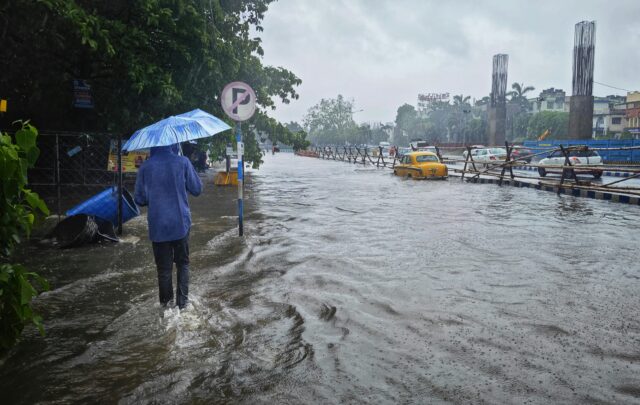
Bangladesh plight serves as warning to world
Amy Yee, Financial Times
If climate change continues unabated, the plight of Bangladesh, which wages an annual battle against floods, provides a grim lesson for many other parts of the world. It will loose the war against rising water.
“If the sea level predictions are true, parts of the country will simply disappear,” said Jo Scheuer, deputy country director of the United Nations Development Programme in India.
Most parts of Bangladesh are less than 10m above sea level, so rising seas coupled with storm surges could put large parts of the population and agricultural land under threat of severe flooding.
The toll would be catastrophic for a country where half its population lives below the poverty line.
(1 Feb 2007)
The Long Consensus On Climate Change
Naomi Oreskes, Washington Post
With the release of the new report by the Intergovernmental Panel on Climate Change tomorrow, the fourth since the organization’s founding in 1988, many will be looking for what’s new. How have estimates of sea-level rise changed? How soon will we achieve a doubling of carbon dioxide levels?
Scientists and journalists focus on novelty, because both are largely about discovery. But from a policy perspective, what matters is not what’s new but what’s old. What matters are not the details that may have shifted since the last report, or that may shift again in the next one, but that the broad framework is established beyond a reasonable doubt. Although few people realize it, this framework has been in place for nearly half a century, and scientists have been trying to alert us to its importance for almost that long.
Scientific research on carbon dioxide and climate dates to the 19th century, when Irish scientist John Tyndall established that CO2is a greenhouse gas…
…It was these concerns that led to the establishment of the Intergovernmental Panel on Climate Change and, in 1992, to the United Nations Framework Convention on Climate Change, which called for immediate action to reverse the trend of mounting greenhouse gas emissions. One early signatory was President George H.W. Bush, who called on world leaders to translate the written document into “concrete action to protect the planet.” Three months later, the treaty was unanimously ratified by the Senate.
Since then, scientists around the world have worked assiduously to flesh out the details of this broadly affirmed picture. Many details have been adjusted, but the basic parameters have not changed. Well, one thing has. In 1965, the concern that greenhouse gases would lead to global warming was a prediction. Today, it is an established scientific fact.
The writer is a professor of science history at the University of California at San Diego.
(1 Feb 2007)