


It is as well to put Economics into perspective. Let us take a step off the earth and view the activites of this curious[human] race from, let’s say, the moon. Let’s pretend we have landed there from another planet and are making a few observations:
From this vantage point the human race has had many ups and downs in its short history – but over the last three hundred years has built a dominant position on the Earth. A cornerstone of its success appears to be its means of managing its growth and development by controlling the distribution of its products and resources. It has assigned this means the label ‘Economics’.
Economics it defines as the branch of social science that deals with the production and distribution and consumption of goods and services and their management
‘Goods’ are produced from raw materials, human effort, energy with the application of knowledge.
‘Services’ are delivered by human effort, utilisation of goods and energy, and the application of knowledge.
By observation economics appears to be the process by which individual effort, energy and raw material are distributed. Distribution seems to be mostly from the less organised cultures to the more organised cultures.
This race has been extraordinarly successful in developing all the key ingredients of its ‘Economy’:
o global person productivity has increased (this is different from population)
o knowledge has grown enormously
o raw materials are still abundant
o energy has been procured without any clear restriction
These elements are inter-dependent. Its global economic model is dependent on all these components continuing to grow and remain in balance. There are really no clear restrictions to this race’s abiltity to develop and apply knowledge, nor to produce and educate its people. The theory seems cognizant of some resources it extracts from the earth – but not all. Its position on energy is not clear.
It would appear that its theory of Economics is based on unlimited and non-degrading resources, and unlimited energy. It has the fundamental limitation of not accounting for either ‘energy’ or ‘resources’, including ‘resource degredation’. Furthermore it has no strategic focus. The feedback mechanisms are based on very short term bases that make no provision for longer term situations. It is therefore a flawed theory that will only work whilst its base conditions apply.
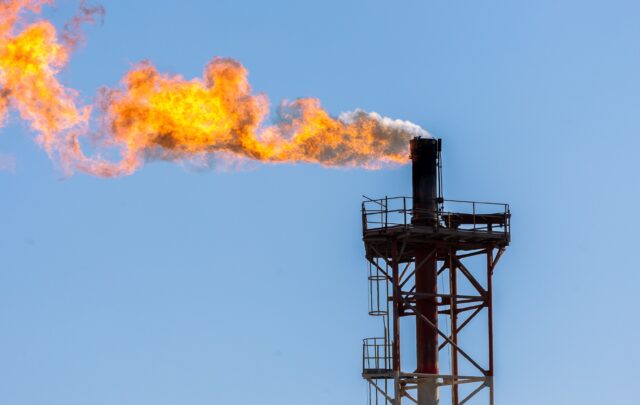
For example the theory confuses the concepts of ‘energy resources’ and ‘energy supply’. This planet still has a lot of ‘energy resources’. However it is hugely dependent on it developing the means of extracting net energy. It has had a very easy ride thus far – and consumed nearly half of the easily available energy resources on the planet. Some individuals now recognise the imminence of what they call ‘Peak Oil’. Whilst they still have half the easily extracted oil to go – sustaining production, let alone expanding it, will require development of resources that are more difficult to extract, and produce a lower net energy gain.
Resources and wealth are also not evenly distributed. Those sub-groups able to combine a stable non-suppressive culture with access to energy and other resources have flourished. In doing so they have built increasingly sophisticated cultures that have re-inforced knowledge development, cultural mechanisms and technology. This combination has given these groups the means to dominate world resources.
By way of example, its ‘Nigerians’ only get a fraction of the wealth that stems from their oil because they couldn’t develop it themselves. The lack of cultural stability (however it arose) hasn’t allowed them to build a growing cultural order. Political unrest, therefore, may well upset their tenuous economic model.
Further observations can be made on the impact this races’ usage of energy and land on its atmospheric resource. The economic theory does not seem to account for this at all. Attempts now seem to be being made – which are evidence of the beginnings of a strategic component to the theory and inclusion of resource degredation. These evolving mechanisms may, however, be too little too late.




Comments
Welcome to the new Resillience commenting system!
We have moved from the former Disqus commenting system to a new system as of September 10, 2026.
We made this change because of privacy concerns regarding Disqus. It's also part of a set of changes to bring more services to the Resilience community under a single login: commenting, (coming September 2026), and online courses (coming 2027). Unfortunately, your old Disqus comments may not reliably link to your account in this new system. Please contact us if you have any questions or concerns.