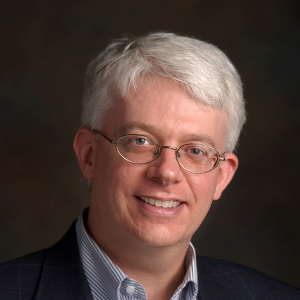
Anthony Perl is Professor of Urban Studies and Political Science at Simon Fraser University in Vancouver, British Columbia. Before joining SFU, Anthony worked at the University of Calgary, the City University of New York, and Universite Lumiere in Lyon, France. He received his undergraduate honors degree in Government from Harvard University followed by an MA and a Ph.D. in Political Science from the University of Toronto.
Professor Perl’s research crosses disciplinary and national boundaries to explore policy decisions made about transportation, cities, and the environment. He has advised governments in Australia, Belgium, Canada, France, and the United States on transportation and environmental research and policy development. He served on the Board of VIA Rail, Canada’s national passenger railway for more than four years. He has also served on the Selection Committee of Transport Canada’s Urban Transportation Showcase Program. He has led the Rail Group of the U.S. Transportation Research Board (TRB), a division of the National Research Council. He has also chaired TRB’s Committee on Intercity Passenger Rail. Professor Perl is a Fellow of the Post-Carbon Institute and Adjunct Professor of Urban Studies at Griffith University in Queensland, Australia.