A Ron Chast cartoon in a recent New Yorker shows a food store scene with a display of vegetables under a sign that reads: “Locally grown by a guy with a Masters Degree in Philosophy. e” That’s funny in more than one way but it also suggests one of my fondest dreams. It is becoming quite common for food production to be an artful, artisanal activity done by master gardeners and skilled professional agronomists with extremely sophisticated biological methods of growing food with improved nutrition, taste, and natural resistance to disease and pests. What if this continues to the point where food farming is indeed a highly respected profession on a par with all the other higher professions in arts and sciences. What if “farmer” suggests to everyone the same kind of regard or esteem as musician, or astronomer, or doctor? This should be the way it is of course because what profession is more important than the one that keeps us, literally, alive.
Historically (but unbelievably to me) producing food has often been a despised human activity. In fact most of the food in centuries past was produced by slaves of one kind or another. Or by peasants, sharecroppers, hicks, hayseeds, all terms of derision. If you wanted respect you got out of food production. As a result, economics practically forced farming out of an art form and into a technological industry where the main idea was to find ways to escape the labor and increase the quantity without increasing the labor. So we have monster farms today with guys driving tractors who do not know a really enriched fertile soil particle from a lump of radioactive ash. Instead of encouraging quality in our food, which also means encouraging sustainability of our food supply, this attitude (make the slaves do the work) encourages quantity and industrial “labor saving” (the fewer the slaves the less the cost) and justifying that approach by claiming that it is the only way we can keep growing populations from starving to death. This attitude is absurd for in truth the only way to keep up an ample food supply is for more and more people to get into the action. It takes brains to grow truly good food. It takes brains to handle a hoe properly, for heaven’s sake. I like to think the young people coming along are realizing this and understanding that being a clodhopper is a laudable occupation. (Even that term, clodhopper, tells the story. In good artisanal farming, there are no clods to hop.)
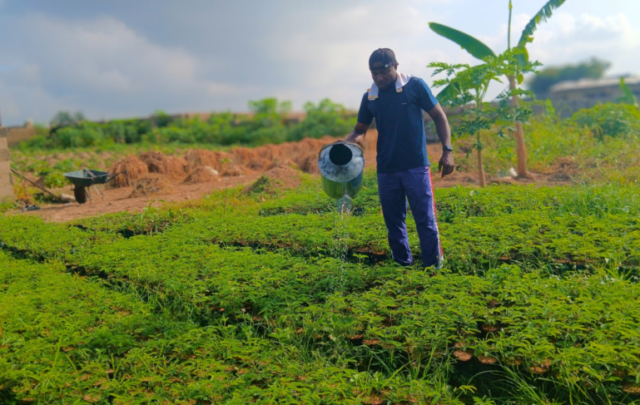
Is it happening? More than I ever dreamed it would. Even here in rural Ohio where change comes slowly, I see examples of young people shifting out of the industrialized, centralized economy into communities of small local businesses, not only in farming but especially in farming. Look at the sweeping move linking the farmer directly to the restaurant, the supermarket, the farmers markets and even food trucks that can go almost everywhere. Look at the growing amount of so-called urban farming going on. In fact, ironically, the new image of the farmer is rooting down more in urbanish areas than out in the country.
Okay, so I’m a wishful thinker. Okay, so this is something I’ve dreamed about and written about all my life. But is it not entirely logical and practical that it could happen? Sure food farming is always going to need sweat, blood, tears, manure, stinging insects, lots of physical discomfort, lots of disappointments, all of which we once tried to push off onto slaves and sharecroppers, but honestly, with modern devices to help out, this kind of discomfort comes nowhere close to what all professionals endure, like cramming all night to pass a qualifying test next day. I would much rather fork manure all day (at a leisurely pace) than have to endure the pressure of working for a politician or being a doctor, or bored out of my mind having to deal with, say, a bunch of pointy-nosed religious ministers who are often honored far beyond their worth. Every respected profession has its agonies. Farming agonies, even practiced without new labor saving devices, are not as tough as being a firefighter or a police officer. We just have to scrape away the prejudices of centuries and keep insisting that a nation of small landowners who are sophisticated agronomists as well, is our salvation.
"Marylebone Farmers Market 2005". Licensed under CC BY-SA 2.0 via Commons.