

" />
Building a world of
resilient communities.

MAIN LIST


The Church of GDP

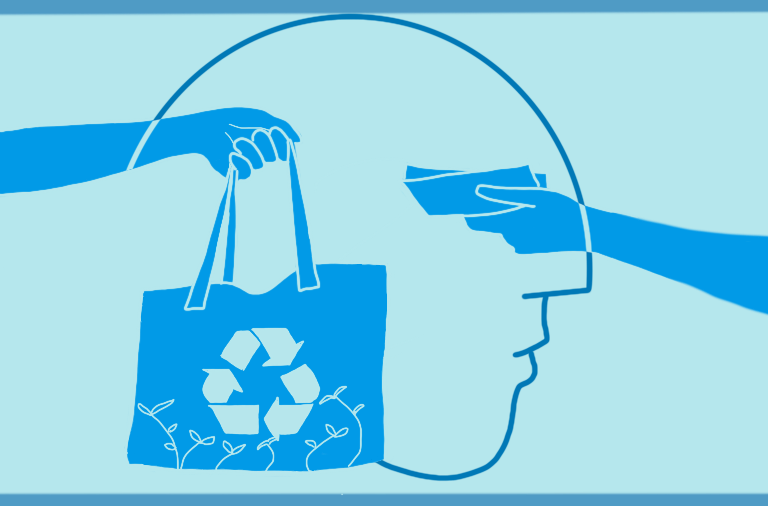
What's the dominant religion of the past 100 years? The answer isn't Christianity with its 2.1 billion followers, or Islam with its 1.3 billion. It's the idea of economic growth, the Church of GDP. Countless countries have embraced rapid growth as a cure to their ills. Getting richer is now an almost universal craving. And yet the worship of growth inspires enormous ambivalence. It is widely seen -- especially in already wealthy societies -- as morally corrupting: the mindless pursuit of empty materialism (do flat-panel TVs really make us better off?) that drains life of spiritual meaning and also wrecks the environment.

Exactly wrong, says Benjamin Friedman.

Friedman, a Harvard economist, has written a hugely provocative book ("The Moral Consequences of Economic Growth") arguing that rapid growth is morally uplifting. "Economic growth -- meaning a rising standard of living for the clear majority of citizens -- more often than not fosters greater opportunity, tolerance of diversity, social mobility, commitment to fairness, and dedication to democracy," he writes. Further, the opposite is true. Poor growth feeds prejudice, class conflict and antidemocratic tendencies.


Full article...

Editorial Notes: A profoundly irresponsible article from the Washington Post. Samuelson casts himself as a skeptic highlighting some counter examples, but is in fact in agreement with Friedman on the moral virtues of endless economic growth. He never mentions unfortunately, within this seemingly hard-questioning review, that we live on a planet with finite natural resources. This is a classic case of 'fair and balanced' discourse where both parties share a very similar framework of assumptions. Normally in a publication like the Washington Post 'growth is good' might be one of those shared assumptions. In opening this question up there is opportunity for some timely reflections on a fundamentally self-destructive — one could say completely deranged — thread through our dominant economic ideologies. But the question is opened only to be closed again more tightly. True reflection might be too painful. Endless growth on a finite planet is fundamentally impossible, and its pursuit (while an understandable enough response to the journey up the energy curve) is leading to mass extinctions, including possibly our own if we intend to try pursuing it on the downslope of the energy curve by burning up the Earth's remaining natural resources. 'The truth is so simple the mind is repulsed' to paraphrase Galbraith out of context. Samuelson resorts to some outright doublethink: "Societies whose politics focus on the gaining and sharing of prosperity can promote their own stability." Sure, but how exactly can a system based on an unsustainable premise, (not to mention one emphasising competition rather than 'sharing') be considered in any way stable? Peak Oil implies that we will be forced to embark on a period of economic contraction. But that does not have to mean the end of progress (by most definitions), positive social reforms, depth of human experience or moral virtues. See instead Center for the Advancement of the Steady State Economy, Richard Douthwaite's book The Growth Illusion, Clive Hamilton's Growth Fetish, or perhaps William Catton's writings on Overshoot. -AF

The Next New Economy

Hardly a new idea, the sharing economy has been hotly discussed among rising …

Cure for Capitalism?  

In Extraenvironmentalist #61 we talk about historical economic transitions …

Dumb Money, Day 5

I've spent the weekend pondering how to bring this series to a conclusion …

Ethiopia’s soleRebels handcraft eco shoes and win

An innovative footwear manufacturer that pays fair wages and uses locally …

Dumb Money, Day 4

Savings is the diet and exercise of a healthy economy.

The Next American Revolution Has Already Begun: An Interview With Gar Alperovitz

The coming painful decades may be the prehistory of the next American …

Dumb Money, Day 3

What is your house worth? What is a company's stock worth? What is your …

